
Hydrotherapy
Winter Joint Pain: What Warm Water, Movement and Ayurveda Can Do

By Rajesh Chada · Founder & CMD, The Ushmaya
19 November 2026 · 6 min read
In short
Many people feel more joint pain and stiffness in winter, partly because cold makes muscles and tissues tighter and partly because people move less. The research linking weather to joint pain is mixed, but warmth and regular movement reliably help. Warm-water exercise, heat before activity, daily gentle movement and Ayurvedic oil therapies are the most useful tools.
Our winter mornings at Ushmaya have a sound to them. It's the quiet creak of guests getting out of chairs a little more slowly than they did in October, and the conversation at breakfast that starts, almost always, with someone's knees.
Joint pain and stiffness in winter is one of the most common complaints we hear from November to February. It's real, it's frustrating, and — the good news — it responds well to two things that cost almost nothing.
Why do joints hurt more in winter?
The honest answer is that we don't fully know, and the research is surprisingly inconsistent. Some studies find links between cold, falling air pressure and joint pain; others find none. What is consistent is that a great many people feel stiffer and achier in the cold.
The likeliest explanations are ordinary ones:
- Cold tightens tissue. Muscles, tendons and the soft tissue around joints are less supple when cold.
- We move less. Shorter days, colder mornings, more time sitting indoors. Joints stiffen with stillness.
- We hold tension. Hunched shoulders, clenched hands, a body braced against the cold.
- Sleep and mood shift, and pain is always worse on poor sleep.
You don't have to settle the science to act on it. Every one of those causes responds to warmth and movement.
The two rules: warmth first, movement every day
Warm the joint before you use it. A warm shower, a warm compress, a few minutes in a warm room before you start moving. Stiff tissue loosens with heat.
Move every day, gently. Stiff joints loosen with use and seize with rest. Ten minutes of slow, full range-of-movement — circling the ankles, bending the knees, rolling the shoulders, opening the hands — done every morning makes more difference than any cream.
How hydrotherapy helps
This is where water becomes genuinely useful.
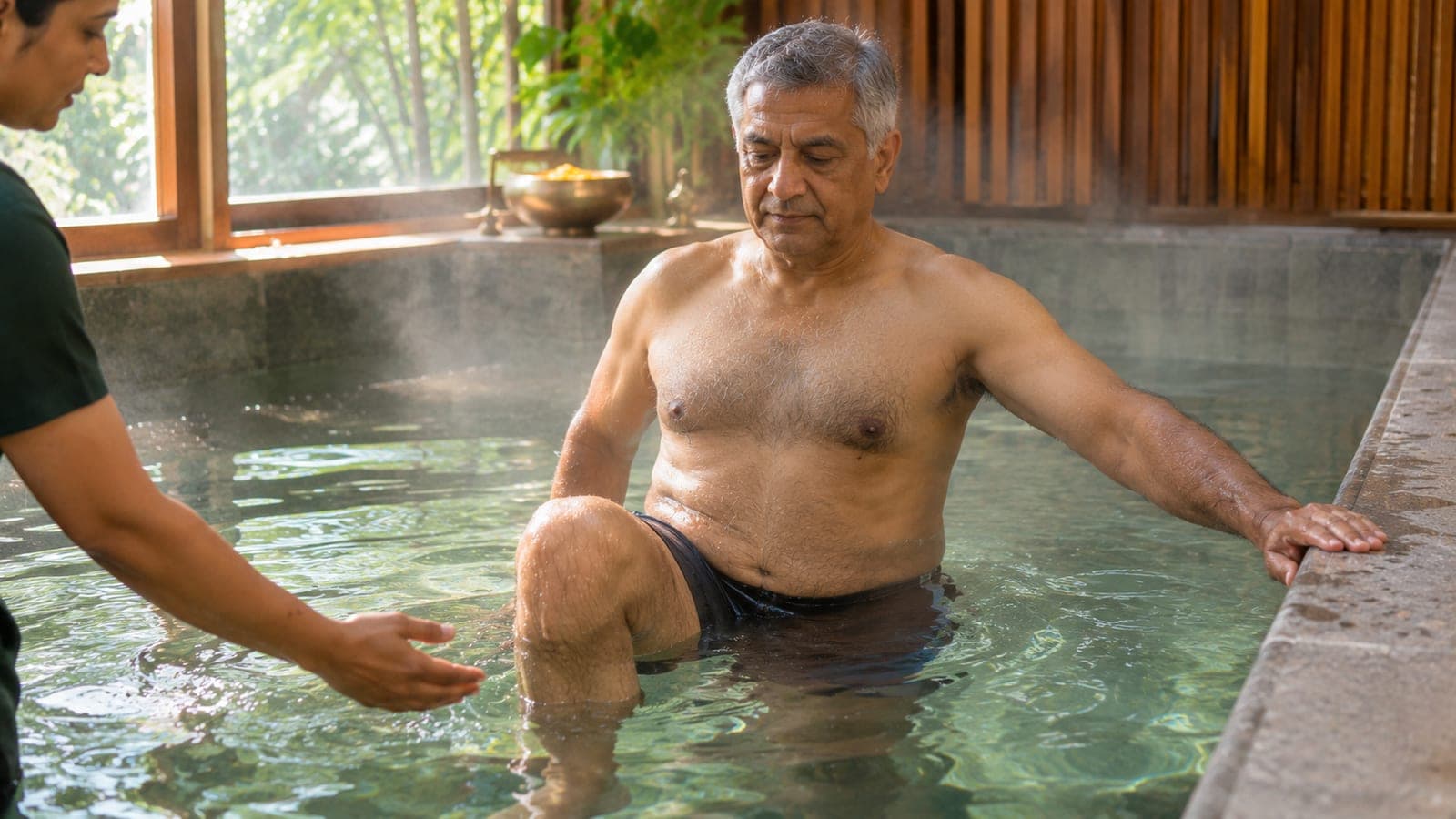
Warm-water exercise. Moving in warm water is one of the better-supported approaches for knee and hip osteoarthritis. Buoyancy takes much of your body weight off the joints, the warmth relaxes the surrounding muscles, and the water's resistance builds strength gently. People who can barely manage a flight of stairs can often walk and exercise comfortably in chest-deep warm water.
Warm mineral and herbal immersion. Warmth carried deep into tissue, with the added comfort of buoyancy. Good for generalised winter aching.
Contrast therapy. Alternating warm and cold on the limbs, finishing cold, to train circulation. Useful for heavy, aching legs and sluggish circulation; I've explained the mechanism in why contrast baths reset the nervous system. In winter we spend longer in the warm and keep the cold short.
Compresses and wraps. A warm compress over a stiff knee or lower back before movement, done properly, is both old-fashioned and effective.
| Approach | Best for | Notes |
|---|---|---|
| Warm-water exercise | Knee and hip osteoarthritis, general stiffness | Well supported; low load on joints |
| Warm immersion | Generalised aching, muscle tension | Relaxing; follow with gentle movement |
| Warm compress | A single stiff joint before activity | Simple to do at home |
| Contrast therapy | Circulation, heavy legs | Needs guidance if you have a medical condition |
| Cold on its own | Fresh injury, swelling during a flare | Not the first choice for winter stiffness |
The full suite we use is on our hydrotherapy page.
What Ayurveda adds
Ayurveda reads winter stiffness as aggravated vata: cold, dry and rough qualities settling into the joints. Its answer is warmth and oil, inside and out.
- Warm, unctuous food — ghee, sesame, cooked vegetables, warm soups — rather than cold, dry and raw.
- Daily abhyanga with warm sesame oil or a medicated oil such as Mahanarayan taila, massaged into the joints in circular strokes.
- Janu basti — a ring of dough built around the knee and filled with warm medicated oil, held for a set time. A classical, very soothing therapy for knee pain.
- Pinda sweda — massage with warm bundles of herbs or medicated rice, which combines heat, oil and pressure.
These are comfort and mobility measures, best chosen by a physician for your condition. They are not substitutes for medical treatment of inflammatory arthritis.
Food, weight and winter joints
What you eat won't cure joint pain, but it influences it more than most people expect.
Weight matters for knees and hips. Every kilogram of body weight is multiplied as load through the knee when you walk and climb stairs. For people with knee osteoarthritis who are overweight, losing even a modest amount of weight is one of the most consistently helpful things they can do. Winter, with its rich food and reduced movement, is when that weight tends to arrive.
Warm, cooked food, in Ayurvedic terms. The classical advice for vata-type joint pain is to avoid cold, dry, raw and stale food and to favour warm, freshly cooked meals with a little ghee or sesame oil. Ginger and turmeric are traditional additions in cooking.
Enough protein. Muscle around a joint protects it. In winter, when people move less, protein intake and some strength work become more important, not less — especially for older adults.
Fewer heavy, late dinners. Poor sleep makes pain worse, and late heavy meals make sleep worse.
The desk-worker's winter stiffness
Not all winter joint pain belongs to older people with arthritis. A lot of it belongs to thirty- and forty-somethings who sit for nine hours a day in a cold office, then sit in a car, then sit on a sofa.
The pattern is familiar: a stiff neck and shoulders, a tight lower back, hips that complain on the stairs, and knees that click getting up. It's rarely a joint disease. It's stillness, cold and posture, compounded.
The fix is the same, scaled down: a warm shower in the morning, five minutes of movement before you sit down, getting up every thirty to forty-five minutes to walk and stretch, and a short walk at lunch in the sun. It's dull advice and it works better than any cushion.
A ten-minute morning routine for winter joints
- Warm up. A warm shower, or a warm compress on the stiffest joint for five minutes.
- Oil. Massage a little warm sesame oil into knees, hands and shoulders with slow circles.
- Move. Ankle circles, knee bends holding a chair, hip circles, shoulder rolls, wrist circles, opening and closing the hands. Ten each, slowly.
- Walk. Five minutes, indoors if it's cold, outdoors once the sun is up.
When it isn't just winter
Ordinary stiffness eases as you move. See a doctor if:
- a joint is hot, red or swollen
- you have a fever
- pain comes on suddenly and severely
- pain wakes you at night
- morning stiffness lasts more than about 30 minutes
- it's getting steadily worse rather than coming and going
These can point to inflammatory arthritis, gout or infection, which need proper medical treatment.
When stiffness has become chronic pain
If you've been dreading every winter for years because of your knees, back or neck, that's no longer a seasonal nuisance; it's a chronic pain problem, and it deserves a programme. Our Chronic Pain Relief Program is a ten-night programme combining hydrotherapy, Ayurvedic therapies and guided movement, and many guests report less pain and better mobility within the first week.
Speak to our physicians about your joints, your history and what you've tried. We'll tell you honestly what water, oil and movement can do — and what they can't.
Key takeaways
- Studies on weather and joint pain disagree, but stiffness in cold weather is a common, real experience — and moving less in winter makes it worse.
- Warmth before movement, movement every day: the two habits that matter most. Stiff joints loosen with use; they seize with rest.
- Exercise in warm water is one of the best-supported options for knee and hip osteoarthritis: the water takes weight off the joints and the warmth eases stiffness.
- Ayurveda reads winter stiffness as aggravated vata and answers with warm oil — daily abhyanga, and clinically, therapies such as janu basti and pinda sweda.
- A hot, swollen or red joint, fever, sudden severe pain or night pain that wakes you is not winter stiffness. See a doctor.
Frequently asked
Why do my joints hurt more in winter?
Several reasons probably combine: cold makes muscles, tendons and the tissues around joints tighter; people move much less in winter, so joints stiffen; and some people seem sensitive to drops in temperature or pressure. Research on weather and joint pain is inconsistent, but the experience is common and the practical fixes — warmth and movement — help regardless of cause.
Is heat or cold better for winter joint stiffness?
For stiffness and chronic aching, warmth is usually more helpful — a warm bath, warm compress or warm-water exercise before activity. Cold is more useful for a fresh injury or a flare with swelling. Contrast therapy, alternating warm and cold, is used for circulation, and should be guided if you have a medical condition.
Does warm-water exercise help arthritis?
Exercise in water is well supported for osteoarthritis of the knee and hip. Reviews of the evidence show modest improvements in pain and function, and water exercise is often easier to do than land exercise because buoyancy takes load off the joints.
What does Ayurveda recommend for joint pain in winter?
Ayurveda attributes winter stiffness to aggravated vata and recommends warm, unctuous food, daily warm-oil massage, and staying active. Clinical therapies include janu basti (warm medicated oil pooled over the knee), pinda sweda (massage with warm herbal bundles) and medicated oils chosen by a physician.
When should I see a doctor about joint pain?
See a doctor if a joint is hot, red or swollen, if you have a fever, if pain comes on suddenly and severely, if it wakes you at night, if morning stiffness lasts more than about half an hour, or if pain is getting steadily worse. These can be signs of inflammatory arthritis, gout or infection, which need medical treatment.
Written by
Rajesh Chada
Founder & CMD, The Ushmaya
Rajesh is the founder of The Ushmaya and the reason Kneipp hydrotherapy exists in India. He writes about water cure, Ayurveda and what genuine healing asks of you.
About Rajesh→A note on medical advice. This article is written for general understanding and is not a diagnosis or a treatment plan. Hydrotherapy, Panchakarma and fasting protocols are powerful and are not appropriate for everyone — particularly during pregnancy, or with cardiac, renal, circulatory or acute conditions. Every therapy at Ushmaya is prescribed after a consultation with our resident physicians. Please speak to your own doctor before changing how you treat a diagnosed condition.