
Planning Your Retreat
A Wellness Retreat for Your Honeymoon? What Couples Should Know

By Rajesh Chada · Founder & CMD, The Ushmaya
17 November 2026 · 6 min read
In short
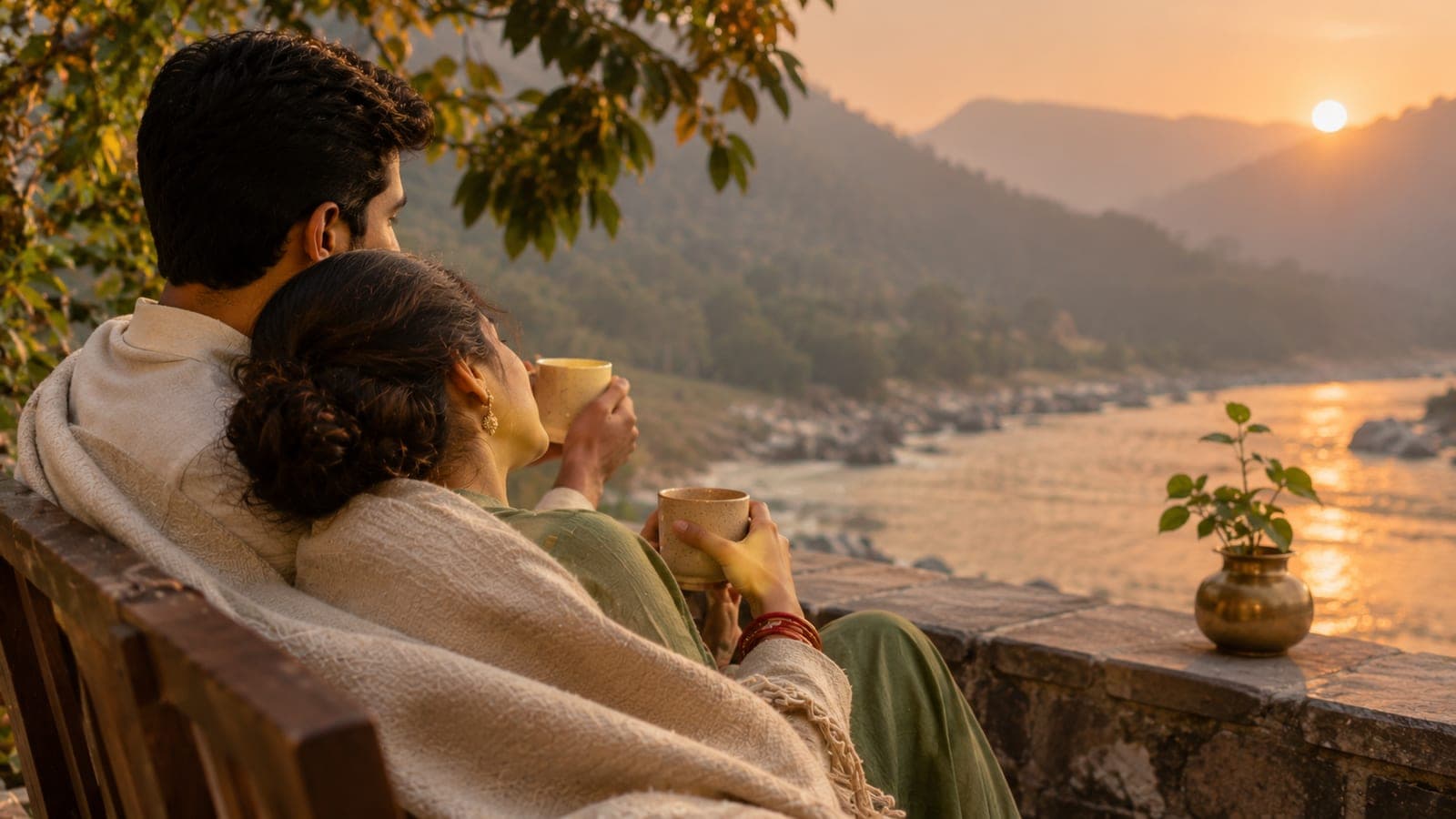
A wellness retreat suits couples who want a restful rather than busy honeymoon or anniversary, especially after an exhausting Indian wedding. A good couples programme combines shared therapies such as side-by-side abhyanga, gentle partner yoga, simple nourishing food and quiet time outdoors. It suits rest and connection, not nightlife or sightseeing.
Newly married couples who come to a retreat in the weeks after a wedding tend to arrive with the same request, usually made very politely: please don't suggest anything before 9am.
By the third day many of them are up for sunrise yoga by choice. But what they need first is what most newly married Indian couples need, and almost nobody plans for: sleep, simple food, and some time alone together without a single relative.
Why a wellness retreat suits an Indian honeymoon
An Indian wedding is not a day. It is weeks — of planning, travel, late nights, rich food, rituals at odd hours, hundreds of conversations and a constant low hum of responsibility. Most couples arrive at their honeymoon physically depleted and slightly overwhelmed.
A beach party or a twelve-city tour adds more of the same. A wellness stay does the opposite: it gives both of you a few days to come down, sleep properly and actually start talking to each other again.
It isn't the obvious choice. It's often the right one.
Who it suits — and who it doesn't
| A wellness honeymoon suits you if… | Choose something else if… |
|---|---|
| You're both tired and want rest more than activity | You want nightlife, bars and late dinners |
| You'd enjoy massages, yoga and nature | Either of you dislikes early mornings and a structured day |
| You like the idea of simple, nourishing food | You're looking forward to a food-and-wine trip |
| You want time alone together, without an itinerary | You want sightseeing every day |
| You'd like to start a healthy habit as a couple | One of you is only agreeing to be nice |
That last line matters. A couples retreat works when both people want it. If one partner is quietly enduring it, have the honest conversation before booking — it's a good one to have anyway.
What a couples programme actually includes
Done properly, a couples wellness stay mixes shared experiences with time that's simply yours.
At Ushmaya, the Couple's Bliss package is a three-night stay that includes:
- a couples' Ayurvedic ritual bath
- two side-by-side abhyanga warm-oil massages
- two gentle partner yoga sessions — no experience needed
- a guided couples meditation
- a private candlelit dinner of sattvic food on the terrace
- a sunset boat experience on the Ganga
- all meals for both of you, herbal teas, and a rose-petal welcome in your room
Pricing is per couple, listed from ₹24,999 in a Deluxe Wellness Room and ₹32,999 in a Wellness Suite. Afternoons are deliberately left free — for a riverside walk, a swim or a nap.
When to go after a winter wedding
Don't fly out the morning after the reception. The most restful couples' stays we see happen one to three weeks after the wedding, once you've had a few days at home, opened the gifts and stopped answering phone calls from caterers.
The 2026 winter wedding season is concentrated in late November and early December, with the most widely listed muhurats around 21 and 24–26 November and the first two weeks of December — though dates vary by region and family panchang. That puts a natural honeymoon window in December and early January.
In Rishikesh that means clear, dry days and cold mornings and nights — fog in December, comfortable sun by mid-morning. Pack warm layers. My guide to Rishikesh's seasons and logistics has the detail.
How long should it be?
Three nights suits most couples. Day one is arrival and sleep. Day two is when you both start to feel it. Day three is the one you'll remember.
Two nights works if you're combining it with other travel — Rishikesh pairs well with a few days in Mussoorie or the hills.
A week makes sense if one or both of you wants to address something specific — poor sleep, digestion after months of wedding food, stress that didn't end with the pheras. In that case, look at a structured programme like the 7-Day Deep Healing Retreat, which you can do together. The reasoning behind those lengths is in how long a wellness retreat should really be.
Wedding fatigue is physical
It's easy to treat post-wedding tiredness as purely emotional. It isn't. Most couples arrive at the end of the wedding weeks with:
- real sleep debt — weeks of late functions and early rituals
- an overloaded digestion — rich food, sweets and irregular meals, several times a day
- a stressed nervous system — logistics, family dynamics and being "on" for hundreds of guests
- often, a cold or cough — crowds, travel and late nights in the start of winter
That's why the first day of a wellness stay is so often spent asleep, and why the simple things — warm, light meals at regular times, an early night, an oil massage, a slow walk by the river — feel so restorative. Nothing dramatic is being done. The body is just being allowed to catch up.
Even if you don't go away straight after the wedding, the same principles apply at home: a few days of simple food, early nights and very few plans before you set off anywhere.
Bringing something home together
The best thing a couples' stay can give you isn't the candlelit dinner, lovely as that is. It's a shared habit.
Couples who leave with a ten-minute morning practice they do together — a few yoga stretches, five minutes of breathing, a cup of warm water on the balcony before phones come on — tend to keep it, because each holds the other to it. A shared foot massage with warm oil at bedtime in winter is another that survives the journey home surprisingly well.
Ask the team before you leave to write down the practices you enjoyed most, simplified for home. It's a better souvenir than anything in the shops.
Anniversaries, too
Everything above applies to anniversaries, often more so. Couples who have been married for ten or twenty years tell us the same thing: the luxury isn't the room, it's two days without logistics. A shared ritual bath and a quiet dinner by the river turn out to be more memorable than another expensive restaurant.
Questions to ask before you book
- What's shared and what's individual? Some couples want everything together; most like a mix.
- How flexible is the schedule? Can you skip a morning session without upsetting anyone?
- Is the menu fixed? Tell them about allergies and preferences early.
- Is private time built in, or is every hour scheduled?
- What's included, and what costs extra? Ask about airport transfers (ours are ₹2,000 per trip) and additional treatments.
- What's the cancellation policy? Wedding plans move. Ours allows free cancellation up to seven days before check-in.
A gentle start
A honeymoon sets a tone. Starting married life rested, eating well and with a shared morning practice is not a bad tone to set.
If you'd like help choosing dates around your wedding, or want to know whether a couples package or a longer programme suits you better, talk to us. We'll tell you honestly — including if you'd be happier on a beach.
Key takeaways
- Indian weddings are physically draining — weeks of late nights, rich food and travel. A restful first trip together is a reasonable choice, not a dull one.
- Book for one to three weeks after the wedding, not the next morning. Give yourselves a few days at home first.
- Three nights is the right length for a couples wellness stay: long enough to sleep properly and settle, short enough to combine with other travel.
- A couples retreat is wrong for you if one partner wants it and the other is being polite. Have that conversation honestly before booking.
- Ask what is shared and what is individual, whether the menu is fixed, how flexible the schedule is and whether there is private time built in.
Frequently asked
Is a wellness retreat a good idea for a honeymoon?
It can be an excellent one if both of you want rest more than activity. After a long Indian wedding, many couples are exhausted, and a few days of sleep, good food, shared therapies and quiet time together can be the best start. If either of you wants nightlife, shopping or a packed itinerary, choose a different trip or combine the two.
What happens on a couples wellness retreat?
Typically a mix of shared and individual experiences: side-by-side oil massages, a couples' ritual bath, gentle partner yoga, guided meditation, nourishing meals and time outdoors. At Ushmaya, the Couple's Bliss package also includes a private candlelit dinner and a sunset Ganga boat experience.
How long should a couples wellness retreat be?
Three nights is a good length for most couples. It allows a full day to decompress and two days of shared therapies and rest. Couples combining it with other travel sometimes do two nights; anyone treating a specific health concern should consider a longer programme.
When is the best time for a honeymoon in Rishikesh?
October to March is the most comfortable period, with clear days and cool nights. November and early December, right in the winter wedding season, are especially pleasant, though mornings get cold in December and January, so pack warm layers.
How much does a couples wellness package cost at Ushmaya?
The Couple's Bliss package is a three-night stay listed from ₹24,999 per couple in a Deluxe Wellness Room, or ₹32,999 in a Wellness Suite, including accommodation, all meals and the therapies and experiences in the package. Check the package page for current pricing and inclusions.
Written by
Rajesh Chada
Founder & CMD, The Ushmaya
Rajesh is the founder of The Ushmaya and the reason Kneipp hydrotherapy exists in India. He writes about water cure, Ayurveda and what genuine healing asks of you.
About Rajesh→A note on medical advice. This article is written for general understanding and is not a diagnosis or a treatment plan. Hydrotherapy, Panchakarma and fasting protocols are powerful and are not appropriate for everyone — particularly during pregnancy, or with cardiac, renal, circulatory or acute conditions. Every therapy at Ushmaya is prescribed after a consultation with our resident physicians. Please speak to your own doctor before changing how you treat a diagnosed condition.