
Planning Your Retreat
Kartik Purnima 2026 in Haridwar and Rishikesh: A Calm Visitor's Guide
By Rajesh Chada · Founder & CMD, The Ushmaya
20 November 2026 · 6 min read
In short
Kartik Purnima 2026 falls on Tuesday, 24 November, with the full-moon tithi running from about 11:42pm on 23 November to 8:23pm on 24 November IST. The holy Ganga snan is taken at dawn on the 24th, and lamps are floated after sunset. Haridwar's Har Ki Pauri is extremely crowded; Rishikesh's ghats are calmer. Check a local panchang for exact timings.
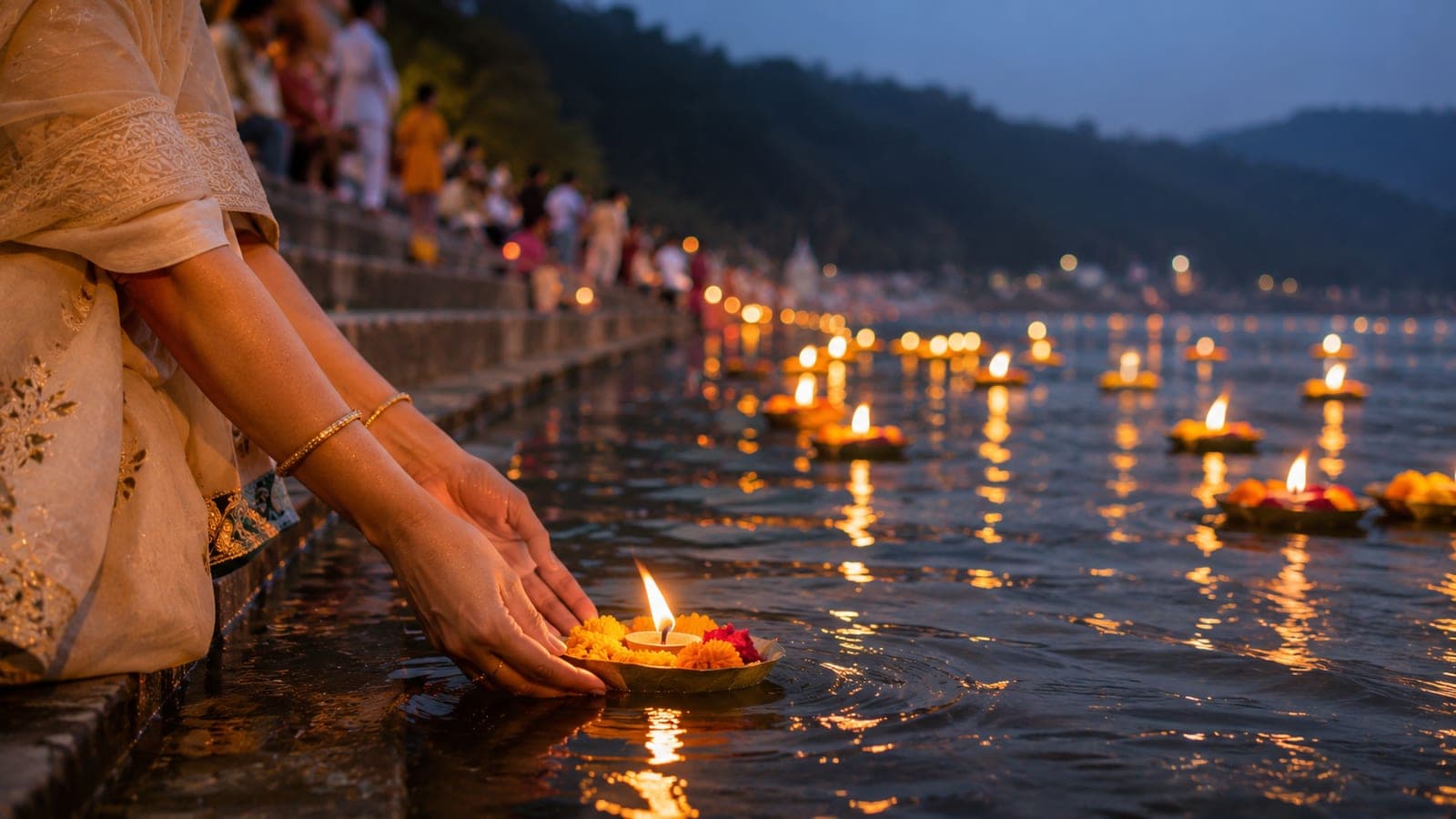
There are a handful of days in the Hindu calendar when this stretch of the Ganga seems to hold its breath, and Kartik Purnima is one of them. Before dawn the ghats fill with people walking down to the water in silence. By evening the river carries thousands of small flames downstream.
If you are anywhere near Haridwar or Rishikesh on 24 November this year, it's worth seeing. It's also worth planning, because the same thing that makes it beautiful — almost everyone turns up — makes it hard work.
When is Kartik Purnima 2026?
Tuesday, 24 November 2026.
Most panchangs give the full-moon tithi from about 11:42pm on Monday 23 November to 8:23pm on Tuesday 24 November (IST). Because the purnima is current at sunrise on the 24th, the holy bath, puja and lamp offerings all fall on that day.
The same date is also:
- Dev Deepawali — the festival of lamps on the ghats, most famously in Varanasi
- Guru Nanak Jayanti — the birth anniversary of Guru Nanak Dev
- Tripurari Purnima — another name for the same full moon
Timings shift slightly by place. For the exact muhurat in Haridwar or Rishikesh, check a local panchang or ask your family priest.
What happens on the day
Ganga snan at dawn. The holy dip is traditionally taken early — in the hours before or around sunrise. It is the heart of the day, and the most crowded moment.
Daan. Charity and offerings — food, clothes, lamps — are part of the observance.
Deep daan at dusk. After sunset, small leaf or clay lamps are floated on the river, and the ghats are lit. The regular evening Ganga Aarti takes on a festival scale.
The whole month of Kartik is considered auspicious for bathing in the Ganga; the purnima is its culmination.
Why Kartik Purnima matters
Kartik is regarded as one of the holiest months of the Hindu year, and bathing in a sacred river through the month — Kartik snan — is an old devotional practice. The full moon that closes the month is its high point.
The day gathers several traditions. It is celebrated as Tripurari Purnima, marking Shiva's victory over the demon Tripurasura. It is Dev Deepawali, when lamps are offered to the river as the gods' own festival of light. And for Sikhs it is Guru Nanak Jayanti, the birth anniversary of Guru Nanak Dev, marked with prabhat pheris, kirtan and langar at gurdwaras across the region.
For many families the dip is about gratitude and renewal rather than anything dramatic: an early start, a moment in the river, a lamp at dusk. That's worth remembering amid the crowds — the most meaningful version of the day is often the quietest.
What to bring
- a small bag with a towel and a complete change of warm clothes
- a shawl or blanket for after the dip
- a flask of something warm
- slip-on footwear you can leave at the steps and find again
- a small amount of cash for daan and offerings
- a printed or written meeting point and phone number, in case networks are slow
- for deep daan, leaf lamps are sold at the ghats; buy them there rather than carrying plastic
Leave behind: jewellery, large bags, and anything you would mind losing in a crowd.
Haridwar or Rishikesh?
| Haridwar (Har Ki Pauri) | Rishikesh (Triveni Ghat and quieter ghats) | |
|---|---|---|
| Atmosphere | The great pilgrimage experience; immense, devotional, overwhelming | Devotional but calmer; more space |
| Crowds | Extremely heavy from before dawn | Busy at the main ghat, quieter elsewhere |
| Traffic | Diversions and heavy congestion likely | Busy, but easier |
| Best for | Those for whom the Har Ki Pauri snan matters | Families, older relatives, first-timers |
| Evening | The famous aarti, at festival scale | Triveni Ghat aarti; lamps along the river |
There is no wrong choice — it depends on whether you want the full intensity of Har Ki Pauri or the experience with more room to breathe. We are at Haripur Kalan, between the two, which makes it easy to take the dawn snan at a quieter ghat and still see the evening lamps in Rishikesh.
How to handle the crowds
- Go early. Before dawn means fewer people than the hour after sunrise.
- Travel light. Leave valuables behind. Carry a small bag with a towel, a change of clothes and water.
- Agree a meeting point with your group before you reach the ghat. Phone networks often slow down in big crowds.
- Keep children and older relatives close, and hold hands on steps.
- Allow extra time. Expect diversions and long walks from parking. Follow police instructions.
- Respect the ritual. Dress modestly, ask before photographing people bathing, and keep your voice low.
The cold-water part: how to bathe safely
Late November mornings by the river are cold, and so is the Ganga. This is where our day job — water therapy — has something useful to say.
The rule of the Kneipp tradition is that cold water should only meet a warm body. The same applies to a festival dip:
- Get warm first. Walk briskly to the ghat; don't stand shivering at the water's edge for twenty minutes.
- Keep it brief. Three dips, not ten minutes.
- Hold on. Use the chains or railings, stay at recognised ghats, and never go beyond your depth — the current can be strong.
- Dry off and dress straight away, then keep moving until you feel warm again.
- Have something warm — tea, or warm water — afterwards.
Skip immersion if you have heart disease, uncontrolled blood pressure, epilepsy, an acute illness or fever, or are pregnant. A symbolic sprinkle of Ganga water on the head is a long-accepted alternative. I've written about how the body responds to cold water, and who should be careful, in the complete guide to hydrotherapy in India.
Getting here around 24 November
- By air: Jolly Grant airport at Dehradun is 35–45 minutes from Haripur Kalan.
- By rail: Haridwar Junction is the practical railhead, but trains around the festival fill early, and the station area is congested on the day.
- By road: Delhi is 5½–6½ hours in normal conditions. Expect much longer on the 23rd and 24th; travel a day or two earlier if you can.
Staying on after the festival
The days after Kartik Purnima are some of the most beautiful of the year here — clear, cool and noticeably quieter once the pilgrims leave. It's also a natural point in the season: Ayurvedically, mid-November marks the start of early winter, the season of strongest digestion and the best time to rebuild.
If you're visiting for the festival and would like to stay a few days to rest, the Sacred Ganga Getaway is a two-night package built around the river — a guided sunrise walk, yoga on the banks, aarti at dusk and a traditional Ayurvedic meal. For something more restorative, the 3-Day Hydro Retreat is our shortest doctor-guided programme.
For the wider picture of the town and its seasons, read planning a wellness retreat in Rishikesh. And if you'd like help planning dates around the festival, get in touch.
Key takeaways
- The day: Tuesday 24 November 2026. The same day is also Dev Deepawali and Guru Nanak Jayanti.
- Snan is traditionally taken early, before or around sunrise; deep daan — floating lamps — after sunset. Confirm timings with a local panchang or your family priest.
- Har Ki Pauri in Haridwar is one of the most crowded places in north India on Kartik Purnima. Go before dawn, travel light, stay with your group and hold the railings and chains at the water.
- Rishikesh's ghats — Triveni Ghat and the quieter stretches upstream — are a calmer alternative for the evening aarti and lamps.
- The Ganga is cold in late November. Warm up before you go in, keep the dip brief, get dry and moving straight afterwards, and skip immersion if you have a heart condition.
Frequently asked
When is Kartik Purnima in 2026?
Tuesday, 24 November 2026. Most panchangs give the Purnima tithi from about 11:42pm on 23 November to 8:23pm on 24 November IST, so the dawn snan and the evening deep daan are both observed on the 24th. Timings vary slightly by place, so confirm with a local panchang.
Where is the best place for Kartik Purnima snan near Rishikesh?
Har Ki Pauri in Haridwar is the most famous and most crowded. In Rishikesh, Triveni Ghat is the main ghat, and there are quieter ghats along the river. If you want the experience without the crush, a smaller ghat early in the morning is the gentler choice.
Is it safe to bathe in the Ganga in November?
The water is cold and the current at ghats can be strong. Bathe only at recognised ghats, hold the chains or railings, don't go beyond your depth, keep the dip short, and get dry and warm immediately afterwards. People with heart disease, uncontrolled blood pressure or other serious conditions should avoid immersion in cold water.
How crowded is Haridwar on Kartik Purnima?
Very crowded — large numbers of pilgrims come for the holy dip, and traffic is heavy on approach roads. Expect traffic diversions, long walks from parking, and packed ghats from before dawn. Travel light, agree a meeting point with your group, and allow plenty of time.
What is Dev Deepawali?
Dev Deepawali is the festival of lamps observed on Kartik Purnima, most famously on the ghats of Varanasi, where thousands of earthen lamps are lit at dusk. Lamps are also floated on the Ganga at Haridwar and Rishikesh on the evening of Kartik Purnima.
Written by
Rajesh Chada
Founder & CMD, The Ushmaya
Rajesh is the founder of The Ushmaya and the reason Kneipp hydrotherapy exists in India. He writes about water cure, Ayurveda and what genuine healing asks of you.
About Rajesh→A note on medical advice. This article is written for general understanding and is not a diagnosis or a treatment plan. Hydrotherapy, Panchakarma and fasting protocols are powerful and are not appropriate for everyone — particularly during pregnancy, or with cardiac, renal, circulatory or acute conditions. Every therapy at Ushmaya is prescribed after a consultation with our resident physicians. Please speak to your own doctor before changing how you treat a diagnosed condition.