
Planning Your Retreat
Planning a Wellness Retreat in Rishikesh: The Complete Guide
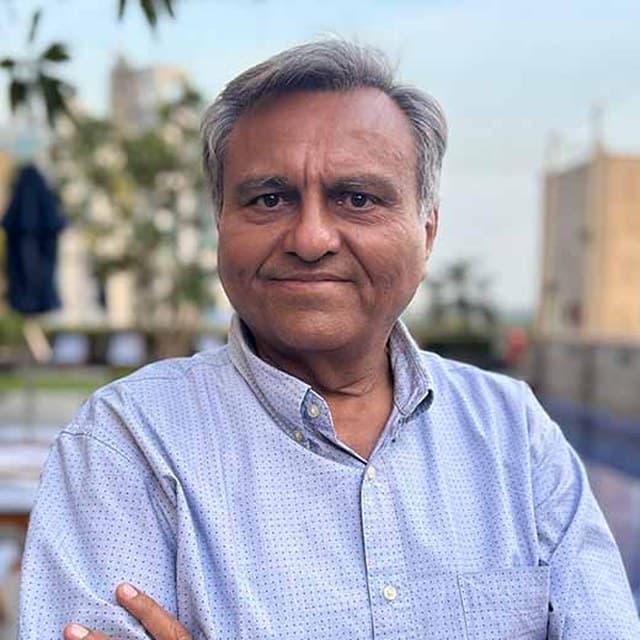
By Rajesh Chada · Founder & CMD, The Ushmaya
2 September 2026 · 8 min read
I run a retreat in Rishikesh, so take what follows with the appropriate pinch of salt. But I also spend a great deal of time on the phone with people who have already booked somewhere else, had a bad experience, and are trying to work out what went wrong. Almost always the answer is the same: they chose the right town and the wrong category of place.
Rishikesh is not one wellness destination. It is at least five, stacked on top of each other, and they serve completely different people. This guide is about telling them apart before you spend money.
The five kinds of place in Rishikesh
Yoga schools and teacher trainings. Ram Jhula, Laxman Jhula, Tapovan. Excellent at what they do — intensive asana, philosophy, 200 and 300-hour certifications, shared rooms, simple food, early mornings. If you want to learn yoga, this is where you go. They are not set up to treat a health condition.
Ashrams. Spiritual practice first. Dormitories, strict schedules, karma yoga, minimal comfort, often minimal cost. Transformative for the right person and bewildering for the wrong one.
Resorts with a spa. Beautiful rooms, river views, a treatment menu you order from. Genuinely restful. But the therapies are hospitality services — you choose them, nobody prescribes them, and nothing connects Monday's massage to Thursday's.
Ayurvedic hospitals and clinics. Clinical, physician-led, often spartan. Serious Panchakarma happens here. The medicine is real and the surroundings usually are not the point.
Integrative medical wellness retreats. Small, residential, physician-led, with a programme rather than a menu, and comfort that is deliberate rather than apologetic. This is the category Ushmaya sits in, and it is the newest and smallest of the five in India.
Nobody tells you which they are, because all five use the same five words on their website. So you have to ask.
The eight questions that reveal everything
Send these to any retreat you are considering. The answers — and how fast they come — will tell you more than any photograph.
- Who designs my schedule, and what are their medical qualifications? "Our wellness team" is not an answer. A name and a degree is.
- Is there a consultation before I arrive, or only after? A programme built before you land is a template. A programme built after a consultation is a prescription.
- Can I choose my own treatments? If yes, you are at a spa. That is fine — just know it.
- How many guests will be there at once? Above about twenty, individual attention becomes arithmetic rather than intention.
- What happens if a therapy is wrong for me? You want to hear "we change it", not "we'll substitute a massage".
- Is food part of the treatment or part of the hospitality? A buffet with a salad bar is hospitality. A plate built for your constitution is treatment.
- What do I leave with? A protocol, a diet sheet, a home practice — or a goodbye and a feedback form?
- Who do I speak to after I go home? The month after a retreat is when most of the gains are lost.
If a place answers all eight crisply, it is a real programme regardless of whose it is. Book it, mine or not.
What it costs, and what you are paying for
Rishikesh spans an enormous range, and in this market price genuinely does signal something — though not always what you think.
- ₹1,000–3,000 a night — ashrams, simple guesthouses, basic yoga stays. Shared facilities, no clinical oversight.
- ₹4,000–9,000 a night — comfortable yoga retreats and mid-range resorts. Good rooms, spa treatments à la carte, no prescription.
- ₹10,000–20,000 a night — integrative programmes. All therapies, all meals, physician consultations and a structured protocol included. Our retreats sit in this band: the 3-Day Hydro Retreat at ₹12,599 and the 7-Day Deep Healing Retreat at ₹35,999 both work out around ₹5,000–6,000 a night once therapies, meals and consultations are counted.
- ₹30,000+ a night — the international luxury tier. Superb, and priced for a different market.
The useful question is not the nightly rate. It is: what fraction of this is treatment? A ₹9,000 room with ₹18,000 of therapies bought separately costs more than a ₹15,000 all-inclusive day and delivers less, because nobody is sequencing it.
When to go
Rishikesh has a real season, and it affects what your body can actually do.
Late September to November — the best window. The monsoon has lifted, the valley is still green, daytime temperatures sit in the pleasant twenties and mornings are cool. Outdoor therapy, river-side meditation and forest walks all work. In Ayurvedic terms this is Sharad Ritu, the post-monsoon season when accumulated pitta aggravates and cooling, clearing therapies are classically indicated — the reasoning is in our guide to September.
December to February — cold and clear. Beautiful light, very few crowds, genuinely cold mornings. Excellent for Panchakarma and indoor therapies; cold-water work needs more care and more warming afterwards.
March to April — the second good window. Warm days, comfortable nights, the valley flowering. Busy.
May to June — hot. Thirty-eight degrees and up. Hydrotherapy feels wonderful; midday anything does not.
July to early September — monsoon. Heavy rain, high humidity, rafting closed, trails slippery. Also: half the crowds, lower prices, and a soft green quiet that suits meditation and silence retreats better than any other time of year. If you don't need the outdoors, it is underrated.
How long to stay
The single most common mistake is booking too short and expecting too much. Briefly:
- 2–3 nights resets your nervous system and your sleep. It will not shift a chronic condition. It is a genuine reset, not a cure — and it is the right choice for a first visit or a stolen weekend.
- 5–7 nights is where therapies start compounding. Digestion, sleep and energy begin moving together. This is the minimum for a real metabolic, pain or gut programme.
- 14 nights and up is the territory of structural change — classical Panchakarma, diabetes reversal work, long-standing pain.
I have written the long version of this, with the reasoning behind each tier, in how long your wellness retreat should really be.
Getting there
- By air: Jolly Grant (Dehradun) airport, 35–45 minutes from us. Daily flights from Delhi, Mumbai, Bengaluru.
- By train: Haridwar Junction is the practical railhead — well connected, roughly an hour away. Rishikesh station is small and slow.
- By road: Delhi to Rishikesh is 5½–6½ hours on the expressway. Comfortable in a car, brutal in the wrong one.
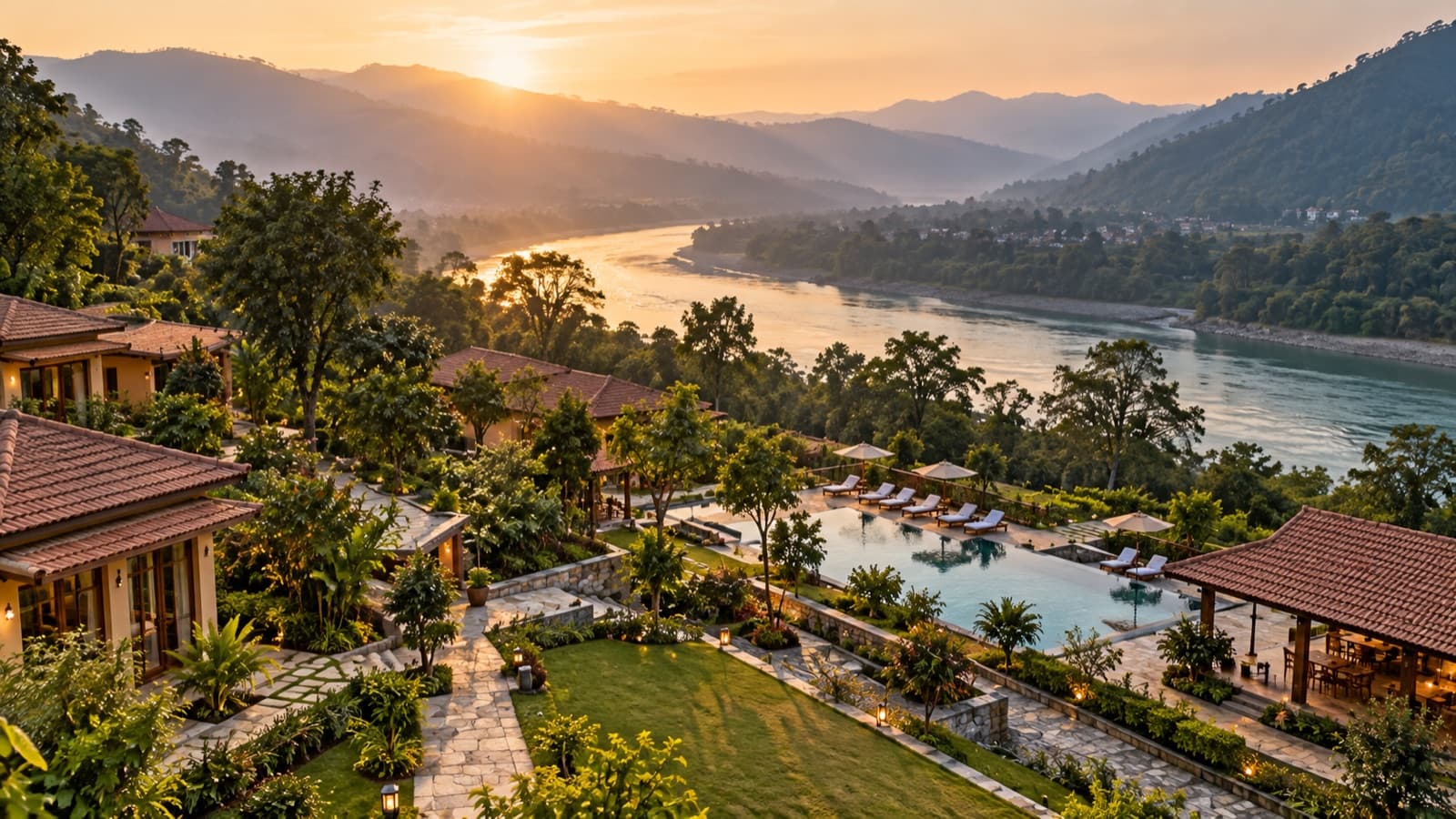
We are at Haripur Kalan, on the Ganges just outside the main town — close enough for Triveni Ghat and the evening Ganga Aarti, far enough that you cannot hear the traffic. Ask about airport transfers when you book; doing it yourself at 6am after a 5am flight is a false economy.
What to pack
Less than you think, and more of two specific things.
Bring: loose cotton and linen you can move and sweat in; one warm layer regardless of month (river mornings are cold year-round); slip-on sandals you can get wet; a modest shoulder-and-knee covering for temple visits; a refillable bottle; any prescription medication in its original packaging with the prescription; walking shoes with grip.
Leave behind: jeans, heels, perfume, elaborate skincare (oil therapies will defeat it), alcohol, and the assumption that you will get work done. Most oil-based Ayurvedic therapies mean your clothes will be stained — bring things you don't love.
Do bring your most recent blood work if you have it. It makes the first consultation twenty minutes shorter and considerably more useful.
What a genuinely good retreat feels like from the inside
Not pampering. Rhythm.
You will be woken earlier than you like. You will eat less than you are used to and feel better for it. Somewhere around day two you will feel flattened, and that is not the retreat failing — that is a nervous system that has been running on adrenaline for years discovering it is allowed to stop. Day three usually turns. By day five people start describing a quality of attention they had forgotten they owned.
Coffee will be absent. So, usually, will your phone, by choice rather than confiscation. Our Digital Detox & Stress Recovery programme makes that explicit; I've written about what actually happens in those first 72 hours.
And the food will be the biggest surprise of the week, which is why I wrote a whole piece on what's actually on the plate.
One last thing
Choose the category first, the property second. A superb yoga school is a bad choice for sciatica. A superb clinic is a bad choice for a honeymoon. A superb resort is a bad choice if you need somebody to take charge of your health for a week.
If you tell us honestly what you are dealing with, we will tell you honestly which of the five kinds of place you need — even when it isn't us. Have that conversation before you book anything.
Written by
Rajesh Chada
Founder & CMD, The Ushmaya
Rajesh is the founder of The Ushmaya and the reason Kneipp hydrotherapy exists in India. He writes about water cure, Ayurveda and what genuine healing asks of you.
About Rajesh→A note on medical advice. This article is written for general understanding and is not a diagnosis or a treatment plan. Hydrotherapy, Panchakarma and fasting protocols are powerful and are not appropriate for everyone — particularly during pregnancy, or with cardiac, renal, circulatory or acute conditions. Every therapy at Ushmaya is prescribed after a consultation with our resident physicians. Please speak to your own doctor before changing how you treat a diagnosed condition.