
Planning Your Retreat
A Quieter New Year: Spending Christmas to New Year at a Wellness Retreat
By Rajesh Chada · Founder & CMD, The Ushmaya
26 November 2026 · 6 min read
In short
A New Year wellness retreat replaces the usual parties and travel crush with sleep, simple food, yoga, meditation and time outdoors, so you start January rested. Between Christmas and New Year, three to seven nights works best. In Rishikesh, late December brings foggy, cold mornings and sunny days around 20°C. It's peak season, so book early.
There is one sentence I would like everyone to be able to say at breakfast on the first of January: I've never started a year feeling like this.
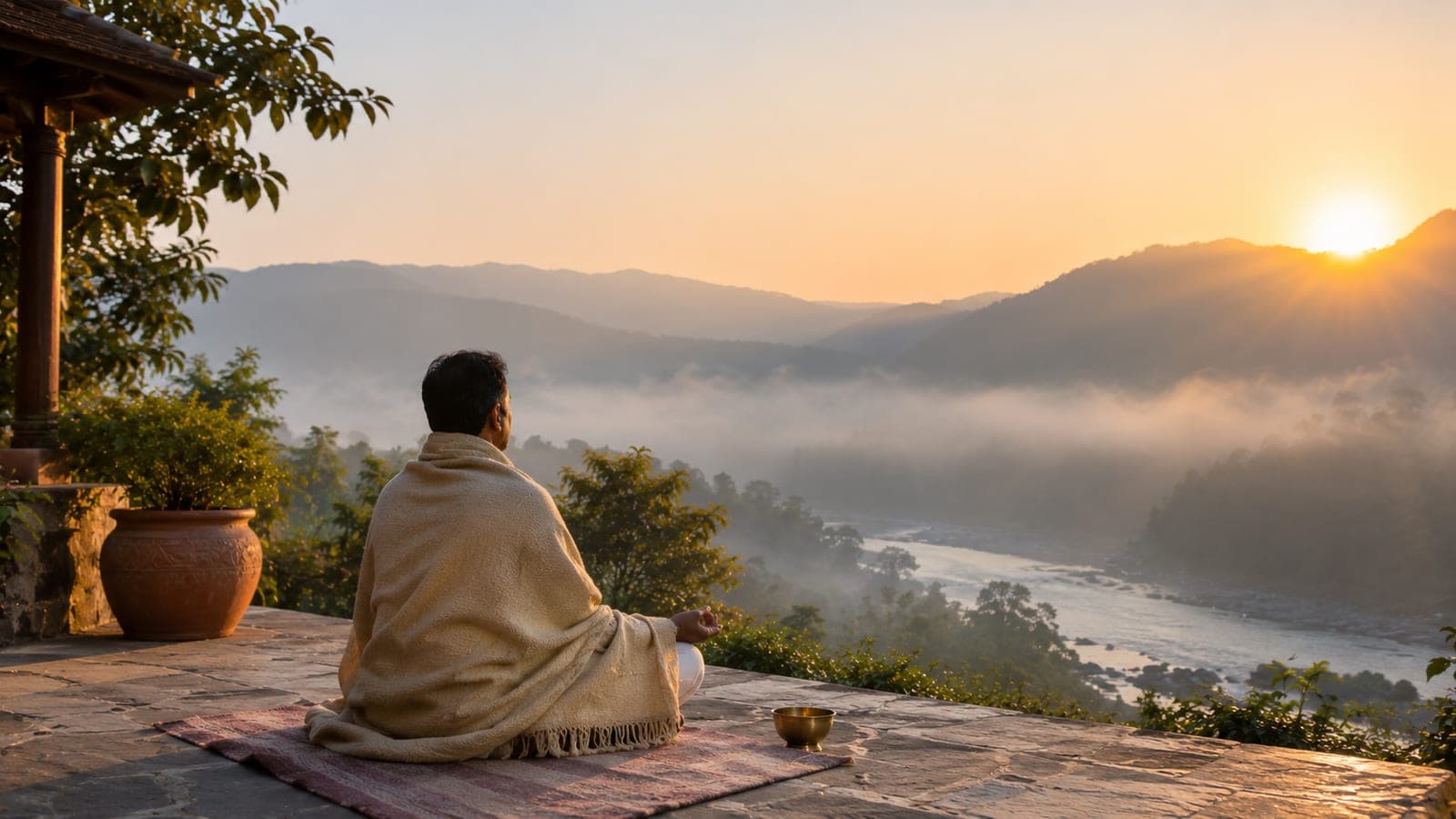
Not euphoric. Awake. Slept, clear-headed, with no hangover and no dread, on a cold, bright morning by the river. It's a very particular feeling, and it's the whole case for spending the turn of the year somewhere quiet.
Who a New Year retreat is for
It suits you if:
- you're tired of starting January exhausted
- the end of your year was hard — work, loss, illness, a heavy December
- you want to begin the year with a habit rather than a hangover
- you'd rather wake up early on the first of January than go to bed late on the 31st
- you're travelling alone and don't want to spend New Year in a crowded bar
It isn't for you if you want a party, a countdown and fireworks. There's nothing wrong with that — it's just a different trip.
How long to stay
The week between Christmas and New Year is the one stretch of the year when many people have time off without having to apply for it. Use it well.
| Length | What it gives you | Fits between… |
|---|---|---|
| 3 nights | A reset: deep sleep, a calmer nervous system, a clear start | 29 Dec – 1 Jan, or 30 Dec – 2 Jan |
| 5 nights | Time to settle and begin to change something | 27 Dec – 1 Jan |
| 7 nights | Enough for real change in sleep, digestion and habits | 26 Dec – 2 Jan |
The physiology behind those numbers is in how long a wellness retreat should really be. The short version: two to three days for the nervous system to stand down, and everything useful happens after that.
What the days are like
Not a party. Not a punishment either. A rhythm:
- Early morning: wake with the light; warm water; gentle yoga or meditation once the sun has taken the edge off the cold
- Breakfast: warm and simple
- Morning: your therapies — hydrotherapy, Ayurvedic oil treatments, a consultation
- Lunch: the main meal of the day
- Afternoon: a walk by the river, a nap, a book, nothing at all
- Evening: an early dinner, perhaps the Ganga Aarti, and bed
New Year's Eve itself is usually quiet — an early night, or a gentle evening practice. If you want to mark midnight in a particular way, ask before you book.
Intention, not resolution
Most New Year resolutions are lists of things you will stop doing, and most are gone by February.
Yoga offers a different tool: the sankalpa. It's a single, short, positive statement of intention, written in the present tense — I am rested, I listen to my body, I give my energy to what matters — repeated quietly at the beginning and end of a practice like Yoga Nidra. It isn't a target; it's a direction.
A retreat is a good place to find yours, because you finally have enough quiet to hear what it is. I've written about the practice that usually carries it in Yoga Nidra: the 30-minute practice that does more than a nap.
Rishikesh at the turn of the year
Late December here is properly winter:
- Mornings and nights: cold, often around 7–8°C, frequently foggy
- Days: sunny and pleasant once the fog lifts, in the high teens to low twenties Celsius
- Rain: rare
- Crowds: the town is busy around Christmas and New Year; outside the main town it is calm
Pack: a warm jacket, layers you can take off by midday, a hat, warm socks, a shawl for evenings, slip-on sandals for therapy areas, and comfortable walking shoes. Mornings are colder than you expect.
Winter is also an excellent season for oil therapies and many Ayurvedic programmes, because digestion and strength are at their highest of the year. For the full picture of seasons, prices and getting here, read planning a wellness retreat in Rishikesh.
Choosing a programme
- For a short reset: the Weekend Wellness Retreat or the 3-Day Hydro Retreat, both three days and two nights.
- For quiet and reflection: the five-night Sacred Silence Meditation Retreat, if the end of your year calls for stillness more than treatment.
- For a full week: the 7-Day Deep Healing Retreat, which fits neatly between Christmas and New Year.
- For a genuine fresh start: the 14-Day Transformation Retreat, if you have the time and something you want to change at the root.
Going alone
Some people would rather spend New Year on their own — after a breakup, a bereavement, a move to a new city, or simply because they'd rather not spend another 31st December at a party they don't enjoy.
If that's you, a retreat is one of the easiest places in the world to be alone without feeling lonely. Meals are shared if you want them to be and quiet if you don't, the days have a structure that carries you, and nobody asks what your plans are for the night. If the end of your year involved loss, the five-night Emotional Detox & Grief Release Retreat is designed for exactly that kind of transition.
Keeping it going after 1 January
The hardest part of a good retreat is the first week back. A few things help the change survive:
- Keep the wake-up time. If you were getting up at 6.30 at the retreat, keep doing it for the first fortnight of January, weekends included.
- Keep one practice. Not the whole schedule — one thing. Ten minutes of yoga, five minutes of breathing, a warm-oil foot massage before bed.
- Keep lunch as the main meal for as many days of the week as your work allows.
- Protect the first hour. No phone for the first thirty minutes after waking.
- Put your sankalpa somewhere you'll see it. On the bathroom mirror or the first page of your notebook.
Three weeks of that and January will look noticeably different from last year's.
Booking tips for the holiday week
- Book early. Christmas to New Year is the busiest week of the winter, and small retreats fill first.
- Arrive a day before the crowds. Roads from Delhi are busiest on 24–25 and 30–31 December.
- Confirm what's included — meals, therapies, transfers, taxes.
- Check the cancellation policy. Holiday plans change.
- Tell the team about health conditions in advance, so your programme is ready when you arrive.
A different first morning
You don't have to spend New Year at a retreat to start the year well. But if you've spent the last few years limping into January, it's worth trying once.
Ask us about dates between Christmas and New Year, and we'll tell you honestly what's available and which programme suits what you're carrying out of this year.
Key takeaways
- A New Year retreat is for people who want to start the year rested and clear rather than celebrated and exhausted. It isn't for anyone who wants a party.
- Three nights resets sleep and energy; a week, which fits neatly between Christmas and New Year, gives you time to actually change a habit.
- Set an intention, not a resolution. A sankalpa — one short, positive statement — tends to last longer than a list of things you will stop doing.
- Late December in Rishikesh: cold, often foggy mornings around 7–8°C, sunny afternoons near 20°C, almost no rain. Pack proper warm layers.
- The week between Christmas and New Year is the busiest of the winter. Book early, confirm what's included, and check the cancellation policy.
Frequently asked
Is a wellness retreat a good way to spend New Year?
It is if you want to start the year rested rather than exhausted. A retreat replaces late nights, alcohol and travel stress with sleep, nourishing food, yoga, meditation and time in nature, so you return to work in January with more energy. It isn't the right choice if you want a celebration or nightlife.
How long should a New Year retreat be?
Three nights is enough to reset sleep and leave feeling noticeably better. Five to seven nights, which fits the week between Christmas and New Year, allows time to work on something specific — stress, sleep, digestion or a habit you want to change.
What is the weather like in Rishikesh at New Year?
Cold mornings and nights, often around 7–8°C with fog, and pleasant, sunny days in the high teens to low twenties Celsius. Rain is rare in December. Bring a warm jacket, layers, a hat and warm socks.
Do New Year retreats include a party or celebration?
Wellness retreats are usually quiet over New Year, with an early night or a gentle evening practice rather than a party. If you want to mark midnight in a particular way, ask the retreat what it plans before you book.
When should I book a New Year retreat?
As early as you can. The week between Christmas and New Year is the busiest of the winter season, and smaller retreats fill first. Booking by late November or early December gives you the best choice of dates and rooms.
Written by
Rajesh Chada
Founder & CMD, The Ushmaya
Rajesh is the founder of The Ushmaya and the reason Kneipp hydrotherapy exists in India. He writes about water cure, Ayurveda and what genuine healing asks of you.
About Rajesh→A note on medical advice. This article is written for general understanding and is not a diagnosis or a treatment plan. Hydrotherapy, Panchakarma and fasting protocols are powerful and are not appropriate for everyone — particularly during pregnancy, or with cardiac, renal, circulatory or acute conditions. Every therapy at Ushmaya is prescribed after a consultation with our resident physicians. Please speak to your own doctor before changing how you treat a diagnosed condition.