
Ayurveda & Seasonal Living
Panchakarma Isn't a Juice Cleanse: What Really Happens, Day by Day
By Rajesh Chada · Founder & CMD, The Ushmaya
22 September 2026 · 8 min read
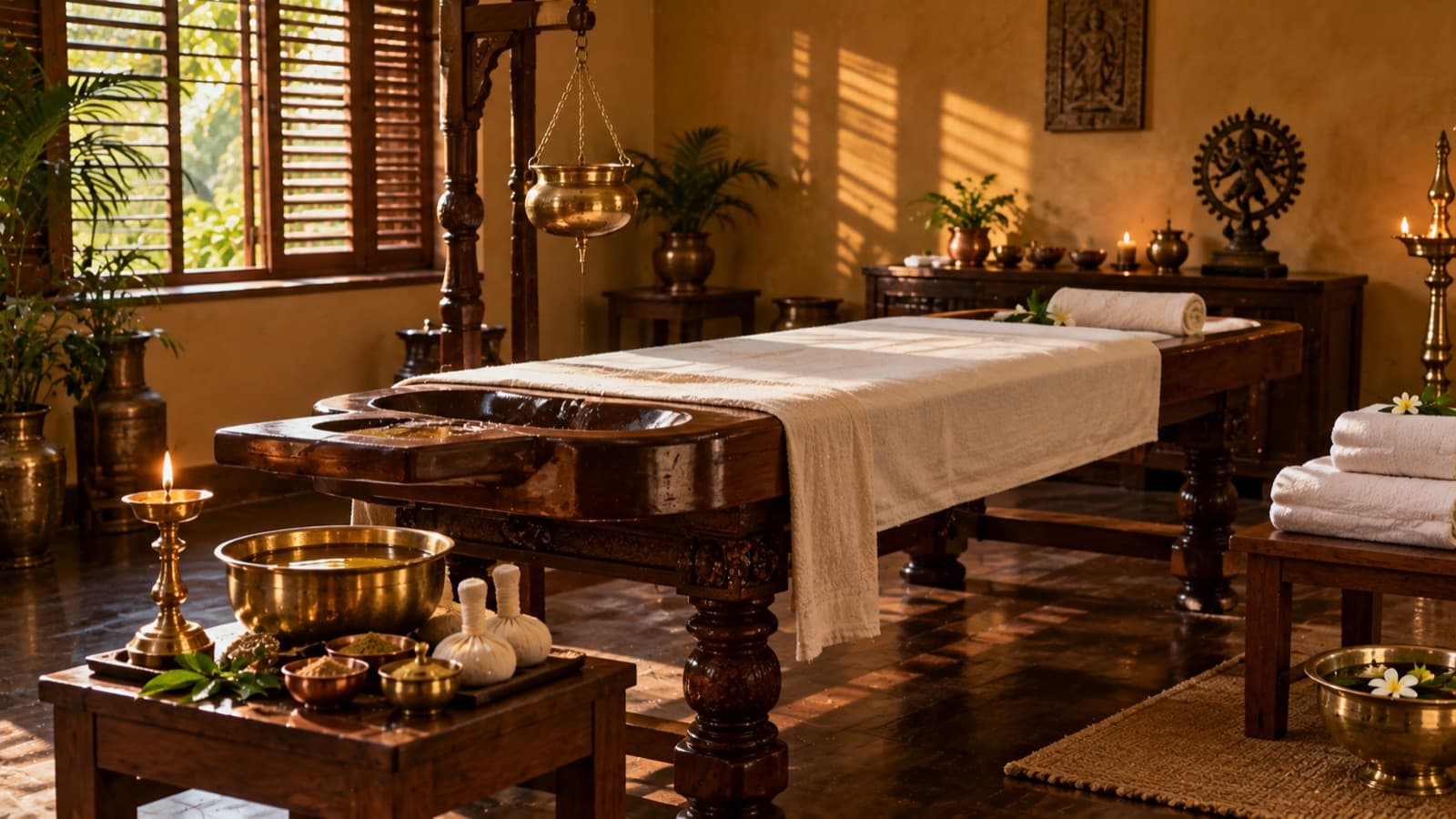
Panchakarma is the most misused word in Indian wellness. It appears on three-day packages, on spa menus beside hot stone massage, and in brochures where the only procedure offered is Abhyanga — which is not one of the five.
So let me describe the real thing: what it is, what the days feel like, why it cannot be shortened, and how to tell whether what you are being sold is the actual article.
What the five actions are
Panchakarma means five actions. They are five eliminative procedures, each clearing a specific dosha by a specific route:
- Vamana — therapeutic emesis. Clears kapha via the upper gastrointestinal tract. Indicated for asthma, chronic respiratory conditions, obesity, certain skin disease. Spring is its season.
- Virechana — therapeutic purgation. Clears pitta via the lower gastrointestinal tract. Indicated for skin disease, acidity, liver conditions, inflammatory complaints. Autumn is its season, which is why we are busiest with it now — the reasoning is in the Sharad Ritu guide.
- Basti — medicated enema, oil or decoction. Clears vata via the colon. The most broadly applicable and most frequently used of the five; classically regarded as the single most powerful procedure in Ayurveda. Indicated for pain, neurological conditions, arthritis, constipation, infertility.
- Nasya — nasal administration of medicated oils or powders. Clears accumulation above the clavicle. Sinus disease, migraine, cervical problems, some hormonal conditions.
- Raktamokshana — therapeutic bloodletting, by leech or venesection. Blood-and-pitta conditions. Rarely indicated and strictly specialist.
Note what is not on that list: Abhyanga, Shirodhara, Udvartana, Pizhichil, Kati Basti. All are genuine Ayurvedic therapies. None is a karma. They are preparation, or they are standalone treatments. A programme offering only these is not Panchakarma, whatever the brochure says.
Note also that you will not have all five. Which procedure you receive depends on your constitution, your condition, the season and your current state. A physician decides. Two guests arriving the same day with the same complaint can receive different procedures, and that is the point.
The three phases, and why the time is non-negotiable
This is the structure that gets cut, and cutting it is what turns Panchakarma into a massage holiday.
Phase one: Purvakarma — preparation (5–7 days)
Nobody goes straight to a procedure. The preparation is the treatment, in the sense that without it the procedure clears nothing.
Deepana and pachana (2–3 days). First, digestive fire is kindled and existing ama metabolised, with herbal preparations and a progressively lighter diet. You will end up on khichdi. The purpose is to make the system capable of what follows — the reasoning is in Agni.
Snehana — internal oleation (3–7 days). You drink medicated ghee, in an increasing daily dose, on an empty stomach. This is the part nobody warns you about and the part everyone remembers. Day one is unremarkable. By day three it is genuinely unpleasant — nausea, aversion, a heavy coated feeling. The physician measures your response daily and decides when you have had enough; there are specific clinical signs of adequate oleation.
What this achieves matters: doshas lodged in deep tissue are lipophilic. Saturating the system with medicated fat mobilises them out of tissue and back into the gastrointestinal tract, where a procedure can remove them. Skip this and the procedure evacuates your bowel without clearing anything. That distinction is the whole difference between Panchakarma and an unpleasant morning.
Swedana — sudation (alongside the last days of snehana). Herbal steam, usually in a steam box with the head outside. Opens channels and loosens what oleation has mobilised.
Phase two: Pradhanakarma — the procedure (1 day, or a graded series)
The main event is short. Virechana is a single morning. Basti is a graded series over 8, 16 or 30 days depending on the protocol.
On a Virechana morning you take the purgative preparation and remain in your room, close to the bathroom, for several hours. The physician counts and assesses the episodes — there are classical criteria for adequate, inadequate and excessive purgation, and the count genuinely matters clinically. It is not dignified. It is also over by afternoon, and the lightness reported afterwards is unlike anything else in medicine.
Phase three: Paschatkarma — the return (7+ days)
The phase that gets dropped, and clinically the most important of the three.
After a procedure, digestive fire is at its lowest and the tissues are at their most receptive. Samsarjana krama is the graded reintroduction of food — thin rice gruel, then thicker, then rice with moong soup, then rice with vegetables, over several days. Eat a normal meal on day one after Virechana and you can undo the entire fortnight.
Alongside it, rasayana therapies rebuild: nourishing herbal preparations, strengthening food, gentle oil therapy. This is where the gains are consolidated. This is also why the best results appear in the weeks after you go home rather than on the last day.
Which is why the arithmetic is what it is. Five to seven days of preparation, one day of procedure, seven days of return. You cannot responsibly do classical Panchakarma in under about fourteen days, which is precisely why our 14-Day Transformation Retreat is the length it is, and why the Panchakarma Purification programme is not offered as a weekend.
What it actually feels like
An honest week-by-week.
Days 1–3. Lighter food than you want. Caffeine withdrawal. The ghee becomes steadily harder to drink. Mild headache, irritability, and a strong suspicion that you have made an expensive mistake. Most people's low point is day two or three.
Days 4–6. Heavy, oily, oddly dreamy. Deep sleep. Vivid dreams — reported so consistently that we mention it in the briefing. Emotional release is common, and not something to be embarrassed about; mobilising deep-tissue residue reliably mobilises other things with it.
Procedure day. Not pleasant. Over by lunchtime. Followed, almost universally, by a profound flatness and then — usually the next morning — a clarity people struggle to describe without sounding evangelical.
Days 8–14. Steadily upward. Appetite returns, properly, and food tastes extraordinary. Sleep consolidates. Skin changes visibly. Energy arrives in a steady form rather than in spikes.
The following month. This is where most of it lands. Which is why we send everyone home with a protocol and check in afterwards.
Who it is for, and who it is not
It is indicated for: chronic skin disease; recurrent sinus and respiratory conditions; arthritis and chronic pain; digestive disorders; metabolic syndrome and insulin resistance; chronic fatigue; hormonal imbalance; and as seasonal preventive care for the generally healthy.
It is contraindicated, or needs a different protocol, in: pregnancy and breastfeeding; children and the very elderly; acute illness and fever; significant cardiac disease; advanced kidney or liver disease; eating disorders; severe debility; immediately post-surgery; and active cancer treatment without oncological coordination.
And a note on medication. Panchakarma can meaningfully change how your body handles diabetes, blood pressure and thyroid medication. Doses often need adjusting during and after. This requires your treating doctor and the Ayurvedic physician to be talking to each other — bring your prescriptions and your most recent blood work. Any retreat that doesn't ask for them is not treating you clinically.
Six questions that expose a fake programme
Ask these of anyone selling you Panchakarma:
- Which of the five procedures will I receive? If the answer isn't one of Vamana, Virechana, Basti, Nasya or Raktamokshana, it isn't Panchakarma.
- How many days of internal oleation? If there is no snehana, there is no Panchakarma. Non-negotiable.
- Who is the physician, and what is their qualification? A BAMS or MD (Ayurveda) with a name. Not "our wellness team".
- Is there a pre-arrival consultation? The procedure is chosen from your constitution and condition, which means it cannot be chosen before someone has assessed you.
- What does samsarjana krama look like here? If they don't recognise the term, the post-procedure phase isn't happening.
- How long is the programme? Under ten days, with one procedure, is a compromise. Under five days is a massage package.
A three-day "Panchakarma" is not a short Panchakarma. It is a different product wearing the word.
What to do if two weeks isn't possible
It often isn't, and I'd rather be useful than purist.
A genuinely good shorter programme does three things honestly: it clears ama through diet and pachana rather than through a procedure; it uses oil therapies, hydrotherapy and nutrition to reduce load; and it tells you plainly that it is not Panchakarma. Our 7-Day Deep Healing Retreat and Gut Health & Digestive Restore are built on exactly that basis — real clinical work, correctly named.
And three nights is still worth doing, for the reasons set out in how long a retreat should be. Just don't call it a detox, and don't expect it to do what a fortnight does.
Autumn is Virechana season and it runs until roughly mid-November. If you have been circling this for a few years, talk to our physicians — the first thing they will tell you is whether you are a candidate at all, which is the most useful information in this entire article.
Written by
Rajesh Chada
Founder & CMD, The Ushmaya
Rajesh is the founder of The Ushmaya and the reason Kneipp hydrotherapy exists in India. He writes about water cure, Ayurveda and what genuine healing asks of you.
About Rajesh→A note on medical advice. This article is written for general understanding and is not a diagnosis or a treatment plan. Hydrotherapy, Panchakarma and fasting protocols are powerful and are not appropriate for everyone — particularly during pregnancy, or with cardiac, renal, circulatory or acute conditions. Every therapy at Ushmaya is prescribed after a consultation with our resident physicians. Please speak to your own doctor before changing how you treat a diagnosed condition.