
Ayurveda & Seasonal Living
Why You Fall Ill Every September — and What Ayurveda Does About It

By Rajesh Chada · Founder & CMD, The Ushmaya
12 September 2026 · 6 min read
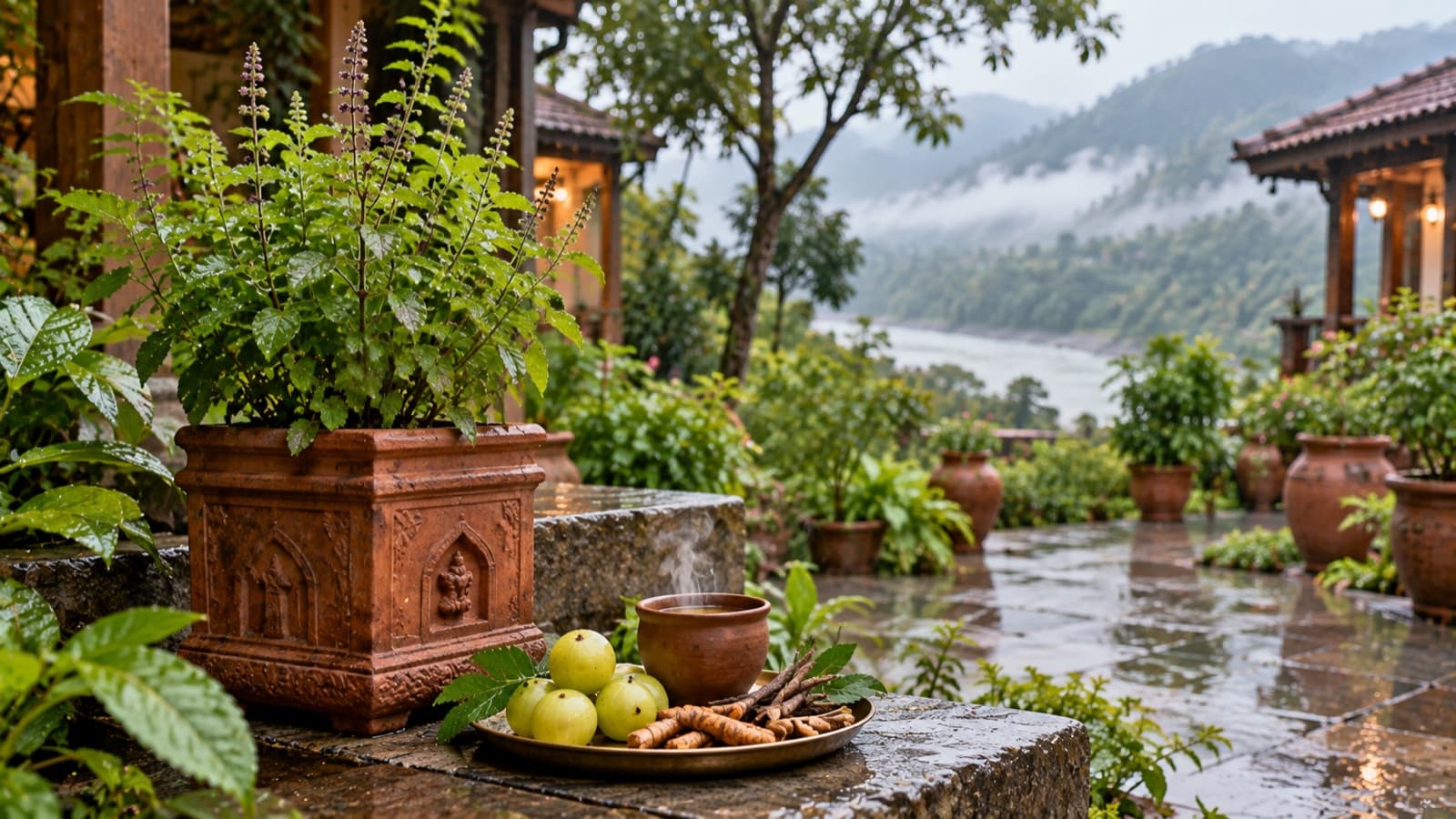
Ask any Indian family doctor which weeks of the year are busiest and you will get the same answer: the ones immediately after the rains stop.
Viral fevers. Dengue and chikungunya. Allergic rhinitis and the cough that will not clear. Boils, fungal infections, eczema flaring. Acidity, loose stools, bloating. And a general flatness that people describe as not ill exactly, just not right.
Ayurveda has a name for this window — ritu sandhi, the junction between seasons — and a whole framework for why it happens. It also happens to line up rather neatly with what modern medicine says about the same fortnight. Both explanations are useful. Here are both.
The Ayurvedic explanation
Three things stack up.
One: digestion was already weak. Through the monsoon (Varsha Ritu), the damp, cool, heavy atmosphere suppresses agni — digestive fire. Food digests incompletely. The residue is ama: sticky, undigested metabolic waste that circulates and lodges in tissue. By late monsoon, most people are carrying a load of it.
Two: pitta has been accumulating. The same damp cool conditions that weakened digestion kept pitta quiet rather than absent. It built up through the rains — sanchaya — without expressing itself.
Three: the sun comes back. Suddenly, into a cleared sky. All that accumulated pitta aggravates at once (prakopa), into a body already carrying ama and running on low digestive capacity.
The result, in Ayurvedic terms, is a system with high dosha disturbance, blocked channels (srotorodha) and low ojas — the subtle essence that governs immunity and resilience. Which is a precise description of a person who catches everything going round.
The deeper logic of Sharad Ritu, and the full seasonal protocol, is in the Ayurvedic guide to September.
The modern explanation
It is not in conflict. It is the same picture from a different angle.
- Vector peak. Standing water from the monsoon gives Aedes aegypti a month of breeding. Dengue and chikungunya peak in September and October across most of India. This is the single biggest contributor.
- Fungal and bacterial load. Weeks of humidity above 80% leave mould and bacteria everywhere — in walls, in clothes, in ducting. Skin and respiratory infections follow.
- Allergen surge. Post-monsoon mould spores and new pollen arrive together.
- Thermal swing. Thirty-six degrees by day, twenty-two at night, in the same week. Airway mucosa dries, cools, dries again.
- Water contamination. Flood and runoff season is gastroenteritis season.
- The gut. Some 70% of immune tissue sits around the gut. A monsoon of heavy, damp, often compromised food leaves it poorly placed to help.
Notice how much of that list is ama and weak agni described in a different vocabulary.
What to actually do, in order
The Ayurvedic strategy for ritu sandhi has a specific shape, and it is not "take an immunity booster".
1. Rebuild digestion before anything else
This is the order that matters. You cannot build immunity on a digestion that isn't working, because ojas is produced from properly digested food. Boosting while digestion is weak just produces more ama.
So: lighten the load for a week. Moong khichdi with ghee as the evening meal. Nothing fried. No curd at night. Spiced buttermilk at lunch. Warm water, not cold. One bitter vegetable a day. Dinner at seven, and nothing after it.
The practical food guide is eating for Sharad Ritu; the reasoning is in Agni.
2. Clear, then build
Shodhana before brihmana — clearing before nourishing. This is why Sharad is the classical season for Virechana, therapeutic purgation, and why autumn is our busiest Panchakarma window. Clearing accumulated pitta and ama out of the system, then rebuilding with rasayana therapies, is a completely different proposition from stacking supplements on top of a blocked system.
That sequence needs supervision; it is not a home protocol. What it actually involves is in what really happens in Panchakarma.
3. The herbs that earn their place
Fewer than the internet suggests, and taken for the right reason:
- Amla — among the richest natural sources of vitamin C, and in season now. Fresh, or as juice, or as part of Triphala.
- Guduchi (giloy) — the classical rasayana for recurrent fever and immune resilience. Genuinely useful, genuinely overused; it needs a dose and a duration, not a daily habit forever.
- Tulsi — respiratory and antimicrobial, and the easiest thing in the world to grow. Three leaves in hot water.
- Turmeric with black pepper and fat — the pepper and the fat are not optional if you want absorption.
- Triphala — gentle, nightly, for clearing rather than purging.
- Ashwagandha — for the depleted, not the inflamed. In an aggravated-pitta month, take it with warm milk and ghee, or not at all.
And a caution worth stating plainly: "Ayurvedic" is not a synonym for harmless. Herbal medicines interact with anticoagulants, thyroid medication, immunosuppressants and diabetes drugs. Some over-the-counter products carry heavy metals. Take them on advice, from a source you can trace.
4. Fix the obvious things
The unglamorous list does most of the work:
- Empty every standing water source weekly — pots, trays, coolers, tyres, drain covers. The single most effective dengue intervention available to you.
- Boil or filter drinking water. Avoid cut fruit and raw salad from outside.
- Dry and sun your bedding and clothes properly. Mould in a wardrobe is a respiratory problem.
- Sleep. Short sleep measurably suppresses immune function, and sleep is also the first casualty of aggravated pitta — which is where the 2am waking comes from.
- Move daily, moderately, in the cool hours.
5. Use cold water deliberately
Short, controlled cold exposure has a measurable effect on immune cell activity and, in the Kneipp tradition, was used precisely for recurrent infection. Kneipp's own recovery from tuberculosis is the founding anecdote.
Start small: thirty seconds of cold water on the feet and calves at the end of your shower, then walk until warm. Build to knee affusions and the Kneipp walk. The mechanism is in why contrast baths reset the nervous system — and crucially, do not start a cold protocol while you have a fever.
Know when it isn't a seasonal pattern
This is the part I want to be unambiguous about, because wellness content tends to be irresponsible here.
See a doctor, today, if you have: fever above 102°F, or any fever lasting more than three days; severe headache with pain behind the eyes; a rash with fever; bleeding gums or nose; persistent vomiting; abdominal pain; breathlessness; or a dropping platelet count.
Dengue is not a dosha imbalance to be managed with turmeric. It is a notifiable viral illness that can deteriorate quickly, and it is at its seasonal peak precisely now. Ayurveda is excellent preventive medicine and excellent convalescent medicine. It is not a substitute for a blood test in September.
Breaking the annual cycle
If you catch the same things every year, the useful question is not what should I take but what state am I entering this season in. People who sail through the post-monsoon weeks are not luckier. They generally have better digestion, better sleep, and less accumulated residue going in.
That is a year-round project with two natural intervention points — spring and autumn, the two ritu sandhi where the body is most receptive to clearing. Autumn is the one almost nobody books. It is also, as it happens, the best weather we get in Rishikesh: the practicalities are in planning a retreat here.
If this September looks like last September, it may be worth stopping the annual repair work and dealing with the underlying state. Talk to our physicians — and in the meantime, go and empty the water out of your plant trays.
Written by
Rajesh Chada
Founder & CMD, The Ushmaya
Rajesh is the founder of The Ushmaya and the reason Kneipp hydrotherapy exists in India. He writes about water cure, Ayurveda and what genuine healing asks of you.
About Rajesh→A note on medical advice. This article is written for general understanding and is not a diagnosis or a treatment plan. Hydrotherapy, Panchakarma and fasting protocols are powerful and are not appropriate for everyone — particularly during pregnancy, or with cardiac, renal, circulatory or acute conditions. Every therapy at Ushmaya is prescribed after a consultation with our resident physicians. Please speak to your own doctor before changing how you treat a diagnosed condition.