
Ayurveda & Seasonal Living
Sharad Ritu: The Ayurvedic Guide to September and the Post-Monsoon Reset

By Rajesh Chada · Founder & CMD, The Ushmaya
4 September 2026 · 7 min read
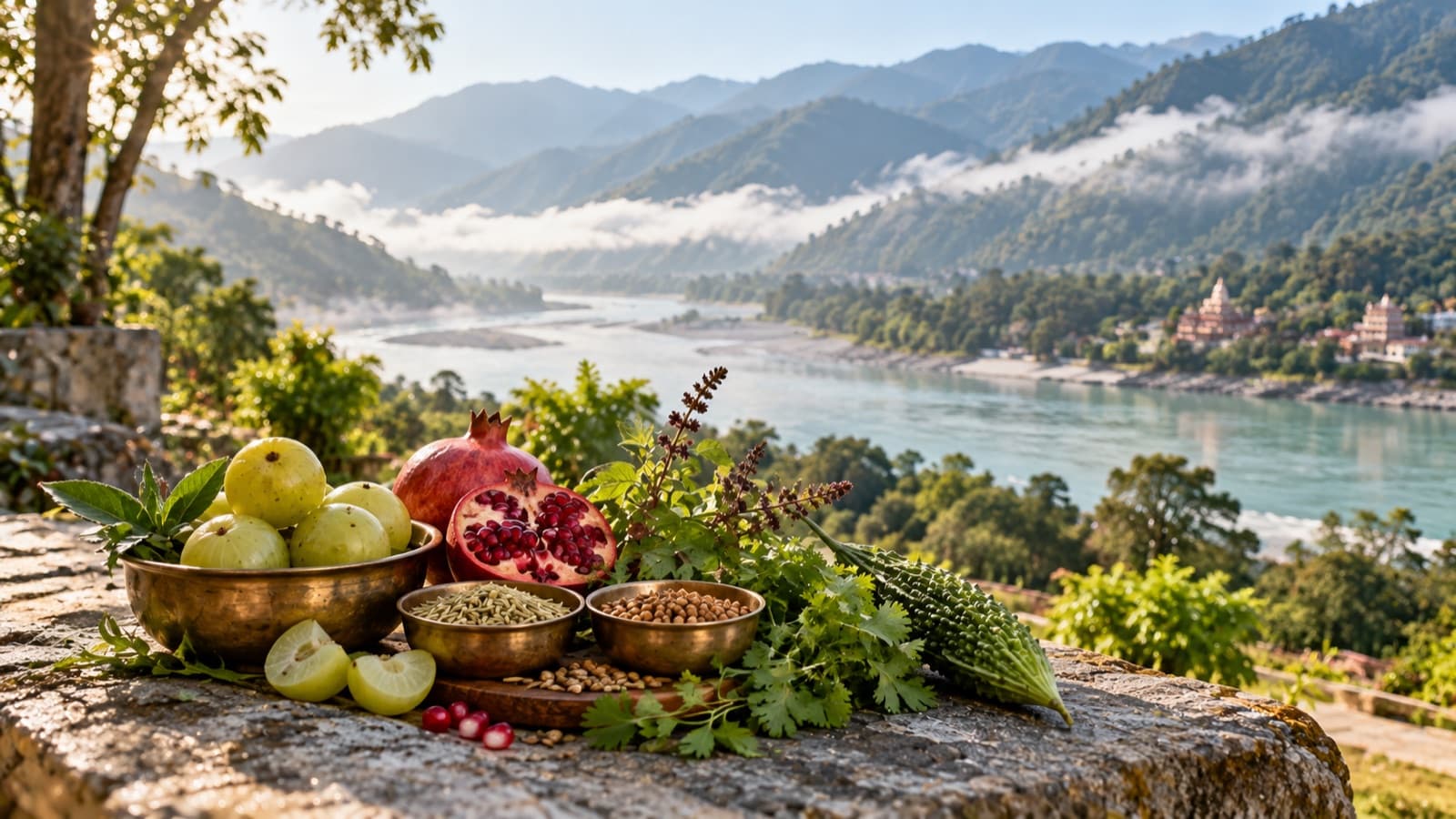
There is a pattern in this valley so reliable I could set a calendar by it. The rains ease sometime in the second week of September. Within ten days our physicians start seeing the same complaints arrive in clusters: acidity, loose stools, burning feet, prickly heat that was not there in July, migraines, skin flare-ups, and a specific kind of irritability that people apologise for before describing.
None of it is coincidence. Ayurveda has a name for this fortnight — Sharad Ritu — and a complete protocol for it that predates every acid blocker in your medicine cabinet.
What Sharad Ritu is
Classical Ayurveda divides the year into six seasons of two months each. Sharad covers the lunar months of Ashwin and Kartik, which in practice means roughly mid-September to mid-November across most of northern India.
The mechanism is the interesting part. Through Varsha Ritu — the monsoon — the body sits in damp, cool, heavy conditions. Digestion weakens. Pitta, the fire-and-water principle governing heat, metabolism and transformation, does not express itself much; instead it quietly accumulates (sanchaya).
Then the rains stop. The sun returns to a sky suddenly cleared of cloud, and the body goes from cool-and-damp to sharp-and-hot inside about a fortnight. All that stored pitta aggravates at once (prakopa).
In Ayurvedic terms this is textbook. In ordinary terms: this is why you feel fine all monsoon and then spend late September with heartburn, a short fuse and skin that has started objecting.
How to tell it is happening to you
Aggravated pitta has a recognisable signature. Not everyone gets everything, but the cluster is distinctive:
- Digestive: acidity, reflux, burning sensation after meals, loose stools, bad breath, sour taste in the mouth
- Skin: rashes, prickly heat, acne, boils, flushed cheeks, cold sores, flare-ups of eczema or psoriasis
- Head: migraines and tension headaches, sore or burning eyes, sensitivity to light
- Thermal: burning palms and soles, intolerance of heat, waking hot at 2–3am
- Mind: irritability, impatience, sharp judgement, a critical edge, trouble falling asleep while being perfectly capable of falling asleep later than you intended
- Other: bleeding gums, heavier periods, more intense PMS, loose hair
If three or more of those arrived in the last two weeks, you are not unwell. You are in season.
The six rules of a Sharad diet
Classical Sharad Ritucharya is unusually specific, and the logic is consistent: cool, bitter, sweet and astringent in; hot, sour, salty and fermented out.
1. Favour bitter and astringent. Bitter gourd, drumstick (moringa), neem, methi leaves, patola, pomegranate, amla. These are the tastes that clear pitta, and they are exactly the tastes modern Indian cooking has quietly abandoned.
2. Eat sweet properly, not sugar. Rice, wheat, moong dal, ripe pomegranate, grapes, amla, dates, ghee and milk. Madhura rasa in the Ayurvedic sense means grounding and building — not confectionery.
3. Ghee, daily, in modest quantity. Ghee is the single most important Sharad food. It is cooling, it carries herbs into tissue, and it protects the gut lining from exactly the acidity this season produces. A teaspoon on the first bite of rice. Not a tablespoon on everything.
4. Stop the sour and the fermented. This is the hard one for Indian kitchens. Curd at night, pickles, vinegar, excessive tamarind, idli and dosa batter, aged cheese, and alcohol all actively worsen the pitta you are trying to clear. Curd in particular — dadhi — is specifically contraindicated in Sharad in the classical texts. Buttermilk thinned with water and spiced with cumin and coriander is the substitute.
5. Cool spices, not hot ones. Coriander, fennel, cardamom, mint, rose. Reduce chilli, mustard, asafoetida and heavy garlic. A jug of water boiled with a spoon of coriander seed and cooled is the cheapest Sharad remedy there is.
6. Eat at midday. Pitta peaks between 10am and 2pm, which is when digestion is strongest. Make lunch the real meal. Keep dinner early and light — this single change resolves more September acidity than any medicine we hand out.
I've written the practical, what-to-actually-cook version of all this in eating for Sharad Ritu.
The daily routine
Food is half of ritucharya. The rhythm is the other half.
Mornings. Wake before sunrise if you can. The air is still cool and the light is soft. This is the best hour of the whole day in September — and it is the one most of us sleep through.
Exercise. Moderate. This is not the season for your hardest training block. Overheating is the thing you are trying to avoid, so move early and keep intensity below the point where you feel your face flush. Swimming, walking, gentle flow, pranayama.
Sun. Avoid direct midday exposure. Classical texts are emphatic about this, and the post-monsoon sun in India is sharper than it feels.
Oil. Switch to cooling oils — coconut, or sesame medicated with sandalwood, khus or brahmi. Abhyanga two or three times a week. Chandana lepana, a thin paste of sandalwood on the forehead and chest, is the classical answer to body heat and remains unreasonably effective.
Moonlight. The texts prescribe sitting in moonlight in Sharad, which sounds charming and unscientific until you notice what it actually is: cool air, no screens, no stimulation, late evening, outdoors. Prescribe that to anyone in 2026 and you'd call it an intervention.
Sleep. Early. And avoid daytime sleeping, which is specifically contraindicated now — it blunts digestion exactly when you want it sharp.
The therapies Sharad calls for
This is where a retreat earns its place, because the two classical Sharad interventions are both things you cannot do at home.
Virechana. Therapeutic purgation — the Panchakarma procedure for clearing excess pitta through the gastrointestinal tract. Sharad is its proper season, and it is the single most seasonally-indicated treatment in the Ayurvedic calendar. It requires preparation (snehana and swedana) over several days, physician supervision during, and a carefully graded return to normal food after. It is also the reason our Panchakarma Purification programme fills up in autumn. What it actually involves — honestly — is in what really happens in Panchakarma.
Raktamokshana. Classical bloodletting for pitta-and-blood conditions. Rarely indicated, strictly supervised, and mentioned here only because the texts do.
Cooling hydrotherapy. This is where Kneipp and Ayurveda land in exactly the same place. Cold affusions, the Kneipp water walk, cool sitz baths and contrast therapy all do mechanically what Sharad asks for physiologically: draw heat out of the periphery, settle an over-active nervous system, and move stagnation. In my experience nothing resolves September burning feet faster than three minutes of knee-deep cold water and a brisk walk afterwards.
Shirodhara. A thin stream of cool medicated oil or buttermilk over the forehead. If your September complaint is migraine, insomnia or that specific hot-headed irritability, this is the treatment.
Six things to do this week
If you take nothing else from this piece:
- Move your heaviest meal to lunch and make dinner small and early.
- Stop curd at night. Replace it with spiced buttermilk at midday.
- Boil coriander seed in water, cool it, drink it through the day.
- Add a bitter vegetable to one meal a day — karela, methi, drumstick.
- Finish your shower with cold water on feet and calves, then walk until warm.
- Be outside, without a screen, for the last half-hour before bed.
Five of those six are free and none takes more than ten minutes.
Why September is the reset nobody books
Most people in India treat wellness as a January activity or a summer escape. Ayurvedically, that is backwards. The two ritu sandhi — seasonal junctions — where the body is most receptive to cleansing are spring and autumn. Autumn is the one everybody skips.
It is also, practically, the best time to be in Rishikesh: the valley is green from the rains, the air has rinsed itself clean, mornings are cool and the crowds have not arrived. The reasoning, with the weather and the logistics, is in our guide to planning a retreat here.
Sharad lasts until roughly mid-November. There is time. If your September has arrived with acidity, heat and a shorter temper than you'd like, talk to our physicians — the protocol for this is three thousand years old and unusually precise.
Written by
Rajesh Chada
Founder & CMD, The Ushmaya
Rajesh is the founder of The Ushmaya and the reason Kneipp hydrotherapy exists in India. He writes about water cure, Ayurveda and what genuine healing asks of you.
About Rajesh→A note on medical advice. This article is written for general understanding and is not a diagnosis or a treatment plan. Hydrotherapy, Panchakarma and fasting protocols are powerful and are not appropriate for everyone — particularly during pregnancy, or with cardiac, renal, circulatory or acute conditions. Every therapy at Ushmaya is prescribed after a consultation with our resident physicians. Please speak to your own doctor before changing how you treat a diagnosed condition.