
Food as Medicine
Eating for Sharad Ritu: A September Food Guide for Indian Kitchens

By Rajesh Chada · Founder & CMD, The Ushmaya
8 September 2026 · 7 min read
Most Ayurvedic food advice fails for one reason: it is written as though you have a dedicated cook, a herb garden and no family with opinions. You don't. You have a working kitchen, a pressure cooker and twenty minutes.
So this is the September version, written for an actual Indian kitchen. If you want the theory behind it — why the post-monsoon weeks aggravate pitta and what that does to you — read the guide to Sharad Ritu first. This piece is just the food.
The one-line rule
Cool, bitter, sweet and astringent in. Hot, sour, salty and fermented out.
That's it. Everything below is an application of that sentence.
What to put in your trolley
Grains. Old rice (basmati, aged at least a year, if you can get it), wheat, barley, red rice. Avoid very new rice and reduce millets like bajra and jowar — they're heating, and they belong to winter.
Dals. Moong dal above everything else — it is the single most pitta-friendly protein in the Indian pantry and it digests easily when nothing else will. Masoor and chana are heavier and more heating; keep them occasional this month.
Vegetables — the bitter and astringent ones. This is where the real medicine is:
- Karela (bitter gourd) — the strongest pitta-clearing vegetable you own
- Drumstick / moringa — specifically named in the classical Sharad regimen
- Methi leaves — bitter, cooling, cheap
- Lauki, parwal, tinda, torai — the gourd family, all gently cooling
- Petha (ash gourd) — superb for acidity and burning urination
- Cucumber, ridge gourd, snake gourd
- Pumpkin, sweet potato — sweet and grounding
Go easy on tomato, aubergine, raw onion, green chilli and spinach in quantity — all mildly pitta-aggravating.
Fruit. Pomegranate and amla are the two Sharad fruits. Add ripe grapes, sweet apples, pears, figs, dates, coconut water, melon. Avoid unripe mango, pineapple, excess citrus and anything sour enough to make you wince.
Fats. Ghee first, coconut oil second. Cut back on mustard oil and sesame oil for cooking — both are heating. Ghee is not optional in September; it is the protective agent.
Dairy. Warm milk, yes, at night with a pinch of cardamom. Curd, no — more on this below. Paneer in moderation. Buttermilk, thinned and spiced, yes at midday.
Spices — the cooling set. Coriander (seed and leaf), fennel, cardamom, mint, rose, saffron, turmeric, a little cumin, dry ginger in small amounts. Reduce chilli, black pepper, mustard seed, asafoetida, raw garlic, garam masala and anything described as tadka-heavy.
The things to stop this month
I'd rather be specific than tactful, because this list is where the results come from.
Curd at night. The classical texts contraindicate dadhi in Sharad outright, and of everything on this list it is the one that produces the fastest improvement when removed. Sour, heating, heavy, and worst of all after dark. Replace it with spiced buttermilk at lunch: one part curd to three parts water, whisked, with roasted cumin powder, fresh coriander and a little rock salt. Same dairy, opposite effect.
Fermented food. Idli and dosa batter, dhokla, bread with a long ferment, aged cheese, vinegar, soy sauce. All sour, all heating. Not forever — just not now.
Pickles and excess tamarind. Achaar is sour, salty and oily: three of the four things pitta doesn't need.
Alcohol. Sharp, hot, sour. If you drink, this is the month to drink least.
Coffee on an empty stomach. Acidic, heating, and doing it at 7.30am with nothing else in you is the most efficient method of producing September acidity that I know.
Deep-fried anything, and late dinners. Both for obvious reasons, and the second more than the first.
A sample September day
Not a prescription — a shape.
On waking. A glass of room-temperature water. If you have acidity, soak a teaspoon of coriander seed and a teaspoon of fennel in water overnight, strain in the morning and drink it. Cheap, and startlingly effective.
Breakfast (8–9am). Keep it light and warm. Soft-cooked oats or broken wheat with milk and cardamom; or moong dal chilla; or stewed apple with ghee and a little jaggery. Add a few soaked almonds, peeled.
Lunch (12.30–1.30pm) — the main meal of the day. This is the non-negotiable one. Pitta peaks at midday and so does your digestive capacity, so put the weight of the day's food here.
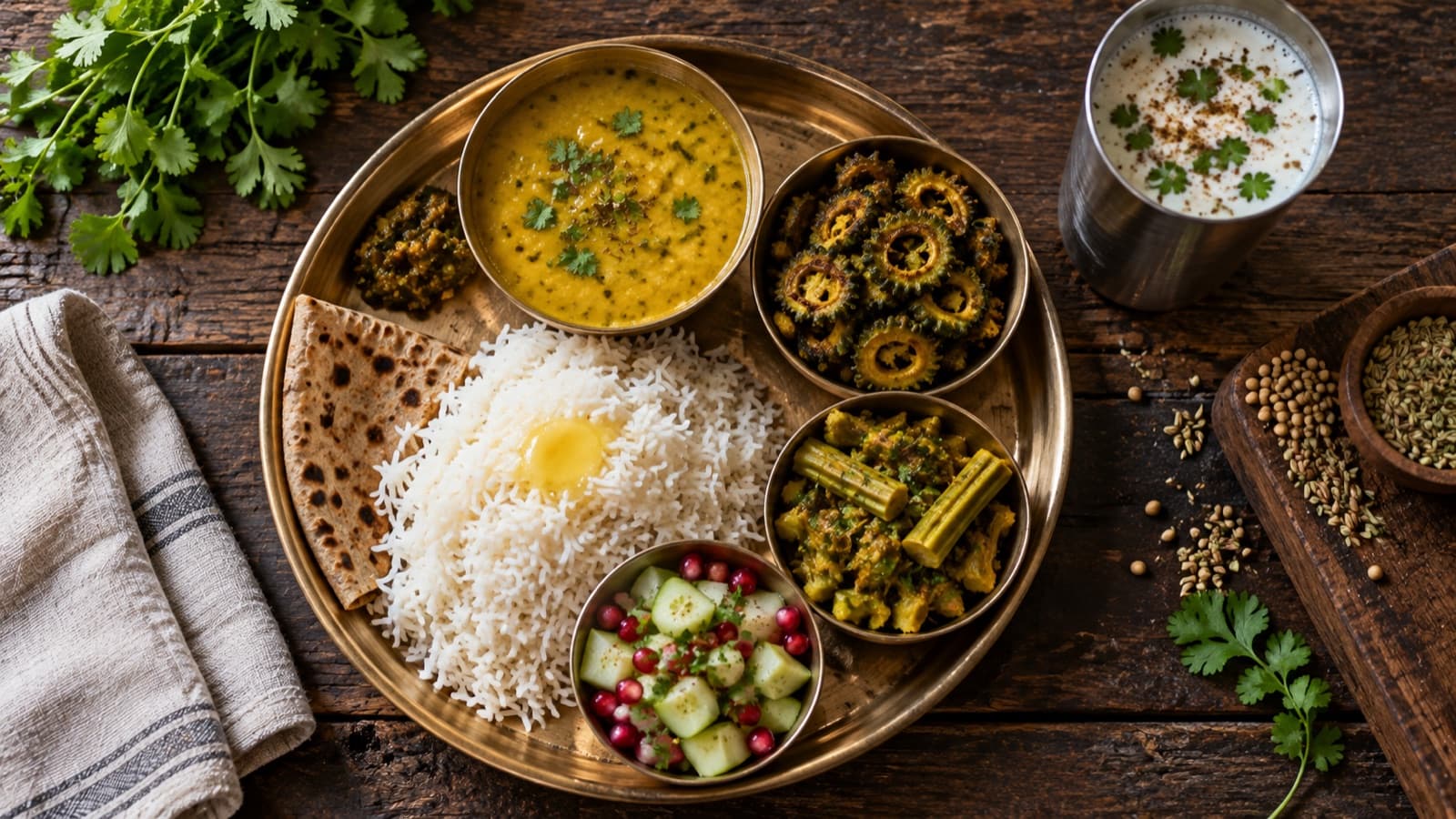
A plate: rice or two chapatis; moong dal with a teaspoon of ghee on top; one bitter or gourd vegetable (karela, drumstick, lauki); a little salad of cucumber and pomegranate; and a glass of spiced buttermilk alongside.
Mid-afternoon (4–5pm). Coriander-fennel water, or coconut water, or a cup of mint and fennel tea. Dates and a few walnuts if you need something.
Dinner (7–7.30pm, and that is not a typo). Small, warm, early. Khichdi with ghee. Or vegetable soup and one chapati. Or lauki with rice. No curd, no raw salad, no fried food.
Before bed. Warm milk with cardamom and a thread of saffron. If your sleep is poor, half a teaspoon of ghee in it.
The two changes with the biggest effect on that list are lunch is the real meal and dinner is at seven. Everything else is refinement.
Three things worth making
Coriander-fennel water. One teaspoon coriander seed, one teaspoon fennel, one litre water. Boil two minutes, cool, drink through the day. For acidity, burning urination, heat in the body.
Spiced buttermilk (takra). 50ml curd, 150ml water, whisked smooth. Roasted cumin powder, chopped coriander leaf, pinch of rock salt. No sugar, no salt-heavy masala. Drink at the end of lunch. In Ayurveda this is a digestive medicine in its own right.
Moong khichdi. Half a cup rice, half a cup split yellow moong, four cups water, a teaspoon of ghee, a pinch of turmeric and cumin, cooked soft. The most forgiving food in Indian cooking: light enough for a weak digestion, complete enough to live on. We serve a version of it on almost every programme, which is why guests are always surprised that retreat food is this simple.
Why the timing matters more than the ingredients
I want to labour this point because people would rather buy an ingredient than change a habit.
Ayurveda's central nutritional idea is agni — digestive fire. Food is not nourishment until it is digested; undigested food becomes ama, the residue behind most chronic complaints. Which means when and how you eat matters at least as much as what.
Practically, that means: eat at roughly the same times each day. Eat to three-quarters full, not to capacity. Don't graze between meals — agni needs a gap to finish its work. Eat sitting down, without a screen. Sip warm water with food rather than cold water, which dampens digestion the way water dampens a fire. And don't eat when you aren't hungry, however good the food is.
I've written the longer version of this in Agni: why Ayurveda treats digestion as the root of everything.
Where this stops being enough
Seasonal eating is preventive, and it is excellent at that. It will take the edge off September acidity, settle skin, improve sleep and reduce that short-fused feeling within a fortnight.
What it will not do is undo years of accumulated ama, reverse a metabolic condition, or heal a gut lining that is genuinely inflamed. That needs clinical work — the sequence of preparation, clearing and rebuilding that our Gut Health & Digestive Restore and Panchakarma programmes are built around, and which Sharad is the classically correct season for.
Start with the food. Move dinner to seven, drop the curd at night, add one bitter vegetable a day. Two weeks will tell you whether the rest is worth your attention — and if it is, come and talk to our physicians.
Written by
Rajesh Chada
Founder & CMD, The Ushmaya
Rajesh is the founder of The Ushmaya and the reason Kneipp hydrotherapy exists in India. He writes about water cure, Ayurveda and what genuine healing asks of you.
About Rajesh→A note on medical advice. This article is written for general understanding and is not a diagnosis or a treatment plan. Hydrotherapy, Panchakarma and fasting protocols are powerful and are not appropriate for everyone — particularly during pregnancy, or with cardiac, renal, circulatory or acute conditions. Every therapy at Ushmaya is prescribed after a consultation with our resident physicians. Please speak to your own doctor before changing how you treat a diagnosed condition.