
Food as Medicine
What's Actually on the Plate at a Wellness Retreat (and Why There's No Coffee)
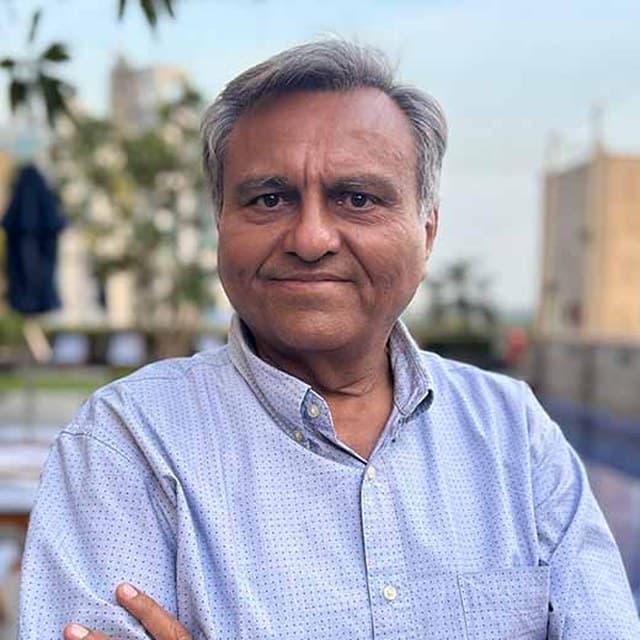
By Rajesh Chada · Founder & CMD, The Ushmaya
24 September 2026 · 7 min read
The most common question before arrival is about the therapies. The most common comment on departure is about the food.
Usually some version of: I expected to be hungry, and I wasn't. Occasionally: why did a plate of rice and dal taste like that? And frequently, a few weeks later: how do I make the khichdi?
Here is what is on the plate, and the reasoning behind each decision — including the ones guests don't like.
What "sattvic" actually means
The word gets used as a synonym for vegetarian. It isn't.
Ayurveda describes three qualities of mind — sattva (clarity, calm, lucidity), rajas (activity, agitation, drive) and tamas (heaviness, inertia, dullness) — and holds that food carries these qualities into the person eating it.
Sattvic food is fresh, seasonal, simple, prepared without violence and eaten soon after cooking. Rice, wheat, moong dal, ghee, milk, seasonal vegetables and fruit, soaked nuts, mild spices, honey.
Rajasic food stimulates and agitates: chilli, raw onion and garlic, excessive salt, coffee, strong spice, sour and fermented food.
Tamasic food dulls: meat, alcohol, anything deep-fried, leftovers, processed and packaged food, and — this is the one that surprises people — anything reheated the next day.
The claim is that a mind being asked to sit still at 6am for pranayama, and then to stay still for forty minutes of Yoga Nidra, will do so more easily on sattvic food than on a vindaloo. You can take that as philosophy or as a practical observation. After a few years of watching it, I take it as practical.
A real day of eating
Not aspirational. This is roughly what a guest on a seven-day programme eats.
6.30am, after therapy. Warm water, sometimes with a slice of ginger. Herbal infusion — tulsi, or coriander and fennel in September.
8.30am, breakfast. Something warm and cooked. Broken wheat dalia with milk and cardamom; or moong chilla; or stewed apple and pear with ghee and a thread of saffron. A few soaked, peeled almonds. Seasonal fruit, eaten alone rather than piled on top of other food.
No cereal, no cold milk, no bread, no fruit juice, no eggs.
12.30pm, lunch — the main meal. This is where the weight of the day sits, because digestive capacity peaks at midday. A thali: rice or two soft chapatis; a dal cooked to your constitution; one or two seasonal vegetables; a little salad; spiced buttermilk; a teaspoon of ghee on the first bite of rice.
In September that vegetable is almost certainly a gourd or something bitter — karela, drumstick, lauki — because Sharad Ritu asks for bitter and astringent.
4pm. Herbal tea. Dates, or a few walnuts, if the programme allows.
7pm, dinner. Small, warm, early, and almost always soupy. Khichdi with ghee. Vegetable soup and one chapati. Lauki and rice. Done by half past seven, which gives three clear hours before sleep.
Before bed. Warm milk with cardamom and saffron. For poor sleep, half a teaspoon of ghee in it.
Total calories: less than you are used to. Reported hunger: minimal. The reason is in the next section.
Why you don't get hungry
Three things, and none of them is willpower.
You're eating warm, cooked, oily food. Ghee and warm preparation produce satiety that a cold salad does not. Fat is satiating; warmth signals completion.
The meals are properly spaced. Four to five clear hours, no grazing. Snacking keeps appetite in a constant low-grade state of request. Remove it and real hunger returns on a clean schedule, usually by day three — the mechanism is in Agni.
You stop eating for other reasons. Most of what passes for appetite in ordinary life is boredom, stress, screen-time or caffeine rebound. Remove those four and the actual food requirement turns out to be considerably smaller.
The things we take away, and why
This is the part of the programme people argue with, so let me defend each one.
Coffee. The hardest. Caffeine is rajasic, it's acidic, and it masks precisely the signal we need you to feel — genuine fatigue. We are trying to establish where your real baseline energy is, and that is impossible through a stimulant. In an aggravated-pitta month it also directly worsens the acidity most people arrive with.
Expect a headache on day one or two. It passes. And the sleep change in week one is substantially down to this single removal.
Alcohol. Tamasic, dehydrating, and it fragments sleep architecture even when it helps you fall asleep. It also interacts badly with several herbal preparations.
Chilli and heavy spice. Mildly inflammatory, heating, and in September specifically contraindicated.
Curd at night. Classically contraindicated in Sharad. Sour, heating, heavy, and worse after dark. It returns as spiced buttermilk at lunch.
Raw salads in quantity. This one surprises health-conscious guests the most. A large bowl of raw vegetables is hard work for a compromised digestion — plenty of fibre, little available nutrition, and a cooling load on an already weak agni. Lightly cooked vegetables deliver more of what you came for. Raw appears as a side, not as the meal.
Cold water and ice. Dampens digestive fire directly. Warm or room temperature, always.
Leftovers. Nothing reheated from the previous day. Ayurveda considers food tamasic within a few hours of cooking, which is an inconvenient belief to run a kitchen on and the reason ours cooks three times a day.
It's a prescription, not a menu
The thing that genuinely distinguishes retreat food from hotel food isn't the ingredients. It is that the kitchen knows what the physician prescribed.
In practice:
- Your plate is built for your constitution and your condition. Two guests at the same table get different dals.
- It changes with your treatment. During the oleation phase of Panchakarma you are on a progressively lighter diet; after a procedure you are on graded rice gruel, and that sequence is clinically important rather than culinary.
- It changes with the season. September is cooling, bitter and astringent. January is warming and more substantial.
- Food is used therapeutically. Buttermilk after lunch is a digestive medicine. Ghee is a carrier for herbs. A spice blend is a dose.
Which is why there is no buffet. A buffet is hospitality; it hands the clinical decision back to the person least equipped to make it that week.
Khichdi, and the question everyone asks
Yes, there is a lot of khichdi. And yes, it is deliberate.
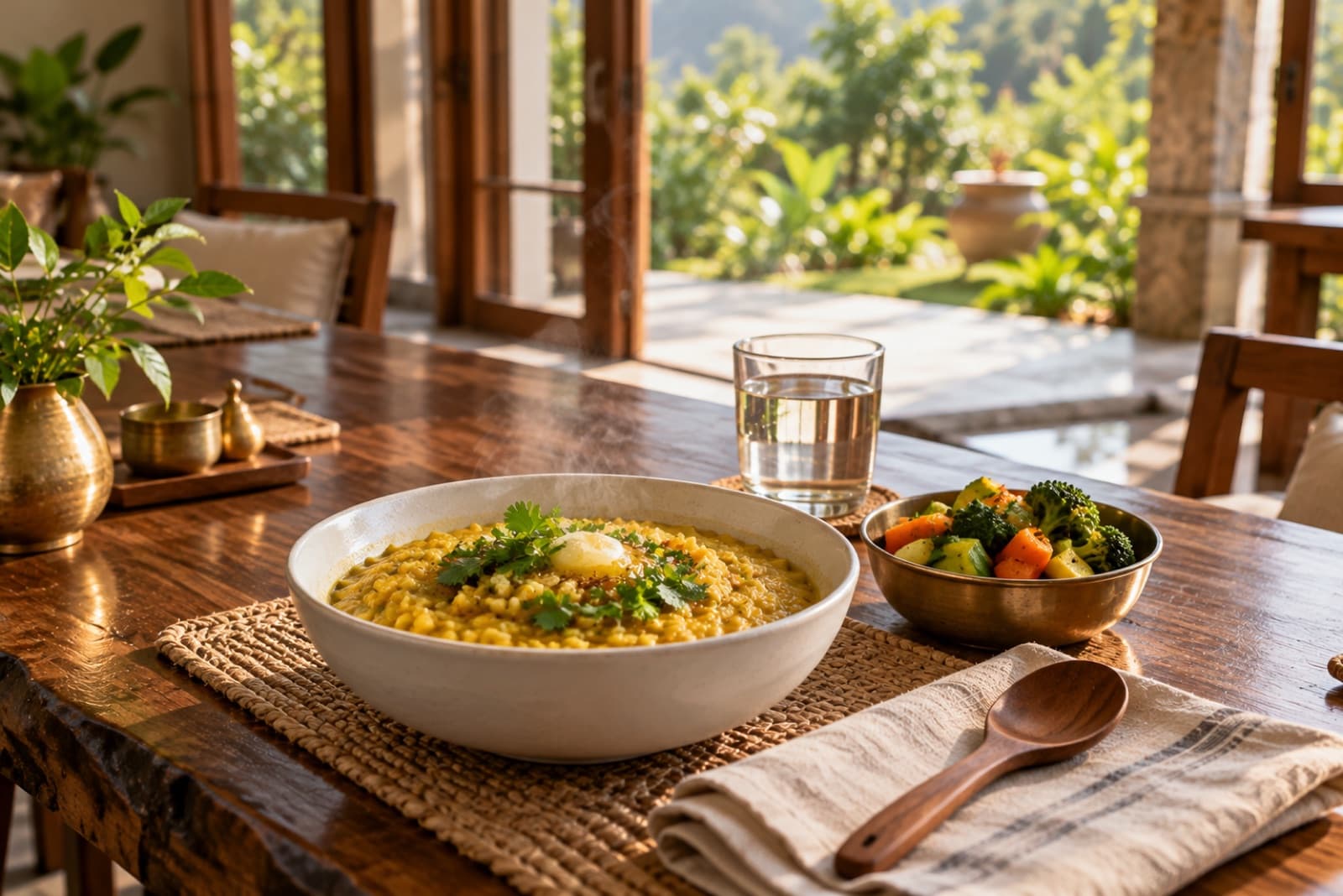
Split yellow moong dal and rice, cooked soft, with ghee, cumin and turmeric. It is the only food that is simultaneously light enough to digest when digestion is weak and complete enough to live on. On gut restoration programmes it is the centre of the protocol, not a filler.
The recipe people ask for, honestly, is: half a cup aged basmati, half a cup split yellow moong, washed; four cups water; a teaspoon of ghee, half a teaspoon cumin, a pinch of turmeric, a pinch of rock salt; pressure cook three whistles; another teaspoon of ghee stirred in at the end; coriander on top. That's it. The reason ours tastes better is a wood fire, ghee made on site, and vegetables picked the same morning — not technique.
What to take home
The two changes that account for most of the benefit, and neither involves buying anything:
- Make lunch the biggest meal and dinner small and early. Seven o'clock, soup or khichdi, nothing after.
- Leave four hours between meals. No grazing.
Then, if you want a third: a teaspoon of ghee on your first bite of rice, and spiced buttermilk after lunch instead of curd at night.
Guests who keep those three hold most of what they gained. Guests who go home and buy supplements generally don't. The honest version of retreat nutrition is that it is unglamorous, cheap and mostly about timing — and that it works for exactly that reason.
If you want to know what your own plate should look like, that's a constitutional assessment rather than an article. Our physicians do them — and come hungry for lunch.
Written by
Rajesh Chada
Founder & CMD, The Ushmaya
Rajesh is the founder of The Ushmaya and the reason Kneipp hydrotherapy exists in India. He writes about water cure, Ayurveda and what genuine healing asks of you.
About Rajesh→A note on medical advice. This article is written for general understanding and is not a diagnosis or a treatment plan. Hydrotherapy, Panchakarma and fasting protocols are powerful and are not appropriate for everyone — particularly during pregnancy, or with cardiac, renal, circulatory or acute conditions. Every therapy at Ushmaya is prescribed after a consultation with our resident physicians. Please speak to your own doctor before changing how you treat a diagnosed condition.