
Ayurveda & Seasonal Living
Is Winter a Good Time for Panchakarma? What the Seasons Really Say

By Rajesh Chada · Founder & CMD, The Ushmaya
21 November 2026 · 6 min read
In short
Classical Ayurveda pairs each main Panchakarma procedure with a season: vamana in spring, virechana in autumn, basti in the monsoon. Winter is not the textbook season for routine seasonal cleansing, but its strong digestion and high strength make it well suited to oil-and-heat preparation, vata-focused basti, rejuvenation and recovery. For a treatment programme, your condition matters more than the month.
One of the most common questions we get in November is some version of: I thought Panchakarma was meant to be done in the monsoon. Is it a mistake to come in winter?
It's a good question, because the classical texts really do give Panchakarma a calendar. But the calendar is more subtle than the version that circulates online, and the honest answer for most people is: winter works very well — for the right programme.
Panchakarma's classical calendar
Ayurveda describes doshas moving through the year in three stages — accumulation, aggravation and pacification — and links each of the main purification procedures to the season when its dosha is aggravated and ready to be removed.
| Procedure | What it addresses | Classical season |
|---|---|---|
| Vamana (therapeutic emesis) | Kapha | Vasanta — spring |
| Virechana (therapeutic purgation) | Pitta | Sharad — post-monsoon autumn |
| Basti (medicated enema therapy) | Vata | Varsha — the rains |
These are the preventive seasonal cleanses — clearing a dosha at the moment it's aggravated, before it causes disease. They are also why the junctions between seasons, the ritu sandhi, are considered the most receptive times for purification. I explain virechana's place in autumn in the Ayurvedic guide to Sharad Ritu, and you can read short definitions of virechana and ritu sandhi in our glossary.
So winter isn't on that list. Does that mean it's the wrong time?
Why winter suits many Panchakarma programmes
Not at all — because most people who come for Panchakarma aren't doing a routine seasonal cleanse. They're addressing something: chronic digestive trouble, pain, skin conditions, metabolic problems, exhaustion. And for that kind of programme, winter has real advantages.
Digestion and strength are at their peak. The texts describe early winter as the season of greatest strength, with the most powerful agni of the year. Panchakarma is demanding, and a strong patient tolerates it and recovers from it better.
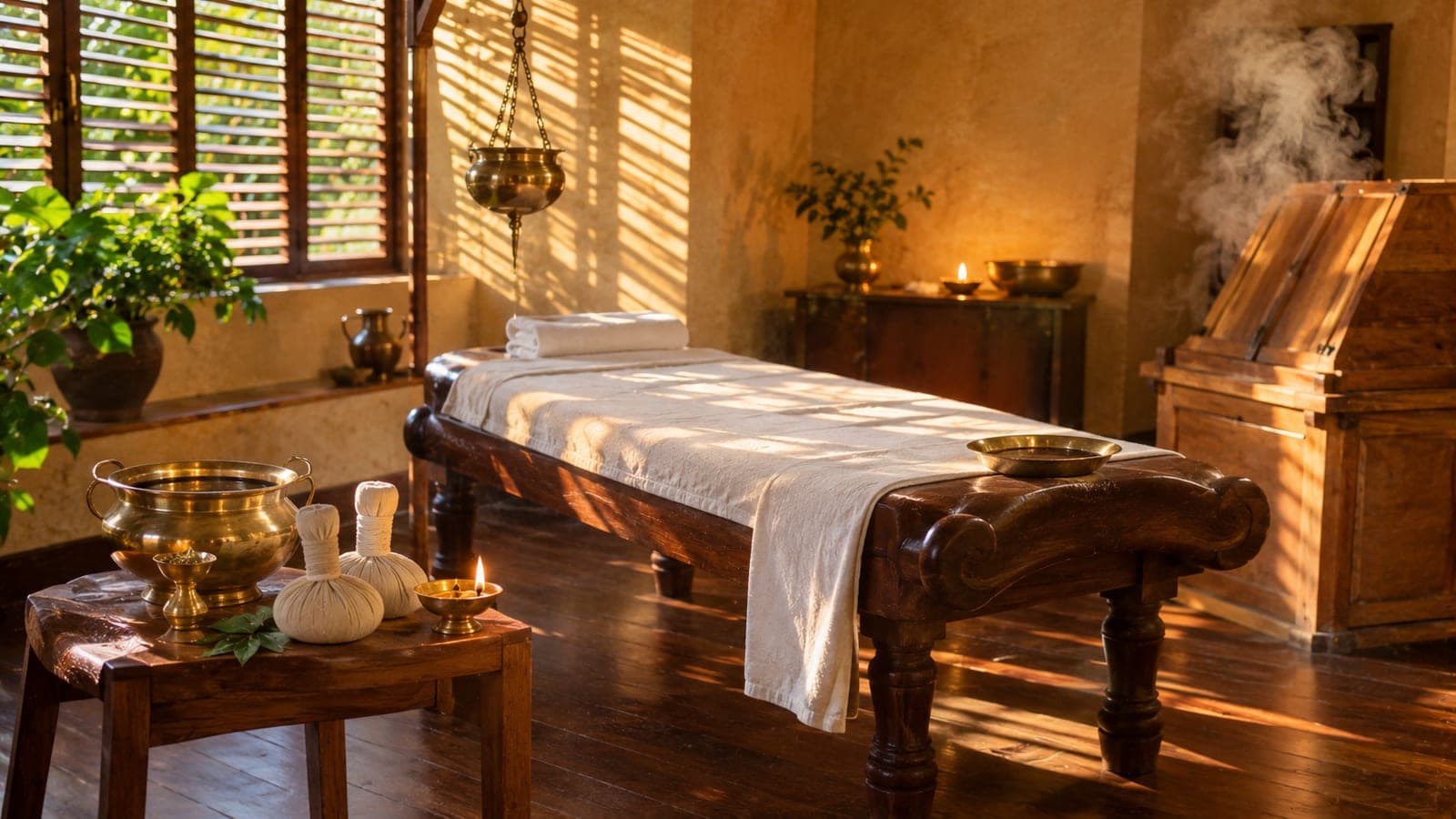
Oil and heat feel right. The preparation phase — snehana (oleation) and swedana (sudation, or herbal steam) — is far more pleasant on a cold morning than in May. People relax into it rather than enduring it.
Vata is easily aggravated in the cold — and basti, the classical answer to vata, is often central to winter programmes.
Rebuilding goes well. After purification comes samsarjana krama, a carefully graded return to normal food (there's a glossary entry on it). In winter, a strong digestion rebuilds smoothly. It's also the classical season for rasayana — rejuvenation — which traditionally follows a cleanse.
When the condition decides, not the calendar
This is the part that matters most. The texts' seasonal calendar describes ideal timing for prevention. When Panchakarma is used to treat a disease, the physician chooses procedures for the condition and adapts them to the season — adjusting intensity, oils, herbs, the warmth of the room and the length of each phase.
A person with long-standing vata-type joint pain and constipation does not need to wait until July. A person with a pitta skin condition in December can still be treated, with the procedure modified. The disease sets the timing far more than the date.
What a winter Panchakarma looks like
The structure is the same in every season; I've walked through it day by day in what really happens during Panchakarma. In winter, the emphasis shifts a little:
- Purvakarma (preparation): internal and external oleation, followed by swedana — in winter, a comforting rather than taxing part of the process
- Pradhana karma (main procedure): chosen for you — often basti, sometimes virechana or others, adjusted for the cold
- Paschat karma (recovery): the graded diet, rest and rasayana, helped by strong winter digestion
And the practical side: warm rooms, warm water, warm food, and days that are cold at dawn but sunny and pleasant by mid-morning.
Preparing in the weeks before
What you do in the fortnight before arriving makes a real difference, in any season.
- Simplify your food. Cut back on alcohol, fried and packaged food, and heavy late dinners. Eat warm, cooked, regular meals.
- Reduce caffeine gradually. Withdrawal headaches on day two of a programme are avoidable if you taper beforehand.
- Sleep earlier. Arriving with less sleep debt makes the first days easier.
- Bring your medical history. Recent blood reports, a list of medications and any diagnoses. Don't stop prescribed medication without talking to your doctor and ours.
- Clear your calendar properly. Panchakarma is not compatible with "just checking email for an hour a day". The recovery phase in particular asks for rest.
And in winter specifically: bring warm, loose clothes you don't mind getting oil on, warm socks, and a shawl. Oil therapies and steam leave you warm and relaxed; walking out into a cold corridor afterwards is not the moment to discover you packed only cotton.
What winter treatment feels like, day to day
People sometimes worry that oil, steam and a light diet will leave them cold in December. Usually the opposite is true: the preparation days are some of the warmest, most comfortable hours of the winter, and a properly run treatment room is kept warm for exactly that reason.
The adjustments are mostly practical. Therapies can be scheduled for the warmer part of the day. Warm water is used for bathing after oil treatments, and you're asked to stay out of cold wind for a while afterwards. The diet during recovery — thin rice gruel, then khichdi, then gradually normal food — is served warm, and in winter it feels like exactly what the body wants.
What doesn't change is the discipline. The rules around rest, food and timing are the same in December as in September, and they matter just as much.
Who shouldn't do Panchakarma — in any season
Panchakarma is a medical process, not a spa treatment. It may be unsuitable, or need significant modification, for:
- pregnancy
- significant weakness, recent major illness or very low body weight
- acute fever or infection
- some heart, kidney and other serious conditions
- the very old and very young, depending on the procedure
That's why it should only ever begin with a physician's consultation, and why a properly run programme can say no.
So when should you go?
Three honest rules:
- Go when your physician says your condition is ready — not when a calendar online says so.
- Go when you can give it the full time. A complete cycle needs about two weeks. A compressed Panchakarma in the "perfect" month is worse than a complete one in a less perfect month.
- If it's preventive and you have a choice, spring and early autumn are the classical windows. If winter is when you have the time, winter is a very good time.
Our Panchakarma Purification programme runs as a 14-night cycle with a 21-night extended option, and winter is one of our favourite seasons to run it.
If you're wondering whether this winter is your moment, book a consultation. Tell us what you're dealing with, and we'll tell you honestly whether Panchakarma is right, which procedures it would involve, and whether now — or another season — would serve you better.
Key takeaways
- The classical calendar: vamana (for kapha) in spring, virechana (for pitta) in autumn, basti (for vata) in the rainy season. These are the preventive seasonal cleanses.
- Winter's advantages are real: digestion and strength are at their peak, oil and heat therapies feel welcome, and recovery after treatment tends to be smooth.
- Winter suits vata-focused programmes, rasayana (rejuvenation), and the rebuilding phase after purification particularly well.
- When Panchakarma treats a condition rather than a season, the physician adapts the procedures to the weather. The disease sets the timing more than the calendar does.
- The best time is when you can give it the full 14 nights or more. A compressed Panchakarma in the 'right' month is worse than a complete one in a less perfect month.
Frequently asked
What is the best time of year for Panchakarma?
Classically, the junctions between seasons — spring, early autumn and the rains — are preferred for routine seasonal cleansing, with each main procedure linked to its season: vamana in spring, virechana in autumn and basti in the monsoon. For a treatment programme aimed at a specific condition, a physician can adapt Panchakarma to any season, and winter suits many programmes well.
Can Panchakarma be done in winter?
Yes. Winter is not the textbook season for routine preventive cleansing, but digestion and strength are high, which suits the oil and heat preparation (snehana and swedana), vata-focused basti therapy, rejuvenation and the careful rebuilding diet after purification. Your physician will adjust the procedures and their intensity to the cold.
Is monsoon better than winter for Panchakarma?
For basti, which addresses vata, the rainy season is the classical choice. For virechana, autumn is preferred. Winter has its own advantages — stronger digestion, easier recovery and pleasant warmth from oil and steam therapies — so neither season is simply better. It depends on which procedures you need.
How long does Panchakarma take?
A complete classical cycle generally needs around two weeks, because preparation, the main procedure and the graded return to normal food each take several days. Ushmaya's Panchakarma Purification programme runs as a standard 14-night cycle, with a 21-night extended option.
Who decides whether Panchakarma is right for me?
A qualified Ayurvedic physician, after a consultation. Panchakarma is not appropriate for everyone — for example during pregnancy, with certain acute illnesses, in significant weakness, or alongside some medical conditions — and the procedures chosen depend on your constitution, condition and strength.
Written by
Rajesh Chada
Founder & CMD, The Ushmaya
Rajesh is the founder of The Ushmaya and the reason Kneipp hydrotherapy exists in India. He writes about water cure, Ayurveda and what genuine healing asks of you.
About Rajesh→A note on medical advice. This article is written for general understanding and is not a diagnosis or a treatment plan. Hydrotherapy, Panchakarma and fasting protocols are powerful and are not appropriate for everyone — particularly during pregnancy, or with cardiac, renal, circulatory or acute conditions. Every therapy at Ushmaya is prescribed after a consultation with our resident physicians. Please speak to your own doctor before changing how you treat a diagnosed condition.