
Food as Medicine
After Diwali: A Gentle 5-Day Ayurvedic Reset (Not a Juice Cleanse)

By Rajesh Chada · Founder & CMD, The Ushmaya
9 November 2026 · 6 min read
In short
A good post-Diwali reset is five days of light, warm, cooked food that lets an overloaded digestion recover — not a juice fast. Start with khichdi and warm water, add vegetables and dal back by day three, return to normal meals by day five, and keep meals at regular times with an early, light dinner throughout.
The Monday after Diwali has a particular mood. Heavy head, coated tongue, a waistband that disagrees with you, and the firm intention to make amends — usually by drinking nothing but green juice until Thursday.
Please don't.
The instinct to punish yourself after a feast is understandable, and almost exactly wrong. What your body is asking for after five days of ghee, sugar and late nights is not deprivation. It is rest — and Ayurveda has a very old, very simple way of providing it.
What actually happened to your digestion
In Ayurvedic terms, festive eating overloads agni, the digestive fire. Heavy food eaten late, often, and on top of the last meal isn't fully digested, and the residue — ama — is what you feel the next morning: heaviness, low appetite, sluggishness, a white coating on the tongue.
I've explained this properly in Agni: why Ayurveda treats digestion as the root of everything. The short version is that ama is cleared by letting digestion catch up, not by flooding it with cold liquid.
Why not a juice cleanse?
Three reasons, all practical.
- It's cold. It is November. Cold, raw liquid is the hardest thing for a tired digestion to deal with in early winter.
- It's sugar without substance. Fruit juice is fast sugar with almost no protein or fat. You will be hungry, shaky and irritable by mid-afternoon.
- It tends to rebound. Three days of juice usually end with a Friday-night dinner larger than anything you ate at Diwali.
| Juice cleanse | Ayurvedic reset | |
|---|---|---|
| Temperature | Cold, raw | Warm, cooked |
| Protein | Almost none | Moong dal, every meal |
| Effect on digestion | Weakens it further | Rests it, then rebuilds it |
| Energy | Crashes by afternoon | Steady |
| Ending | Often a rebound binge | A gradual return to normal food |
| Cost | Bottles of juice | A bag of moong dal and rice |
The five-day reset
Days 1 and 2 — rest
- On waking: a glass of warm water, sipped slowly.
- Breakfast: only if you are actually hungry. If you are, a small bowl of thin moong dal soup or a little khichdi.
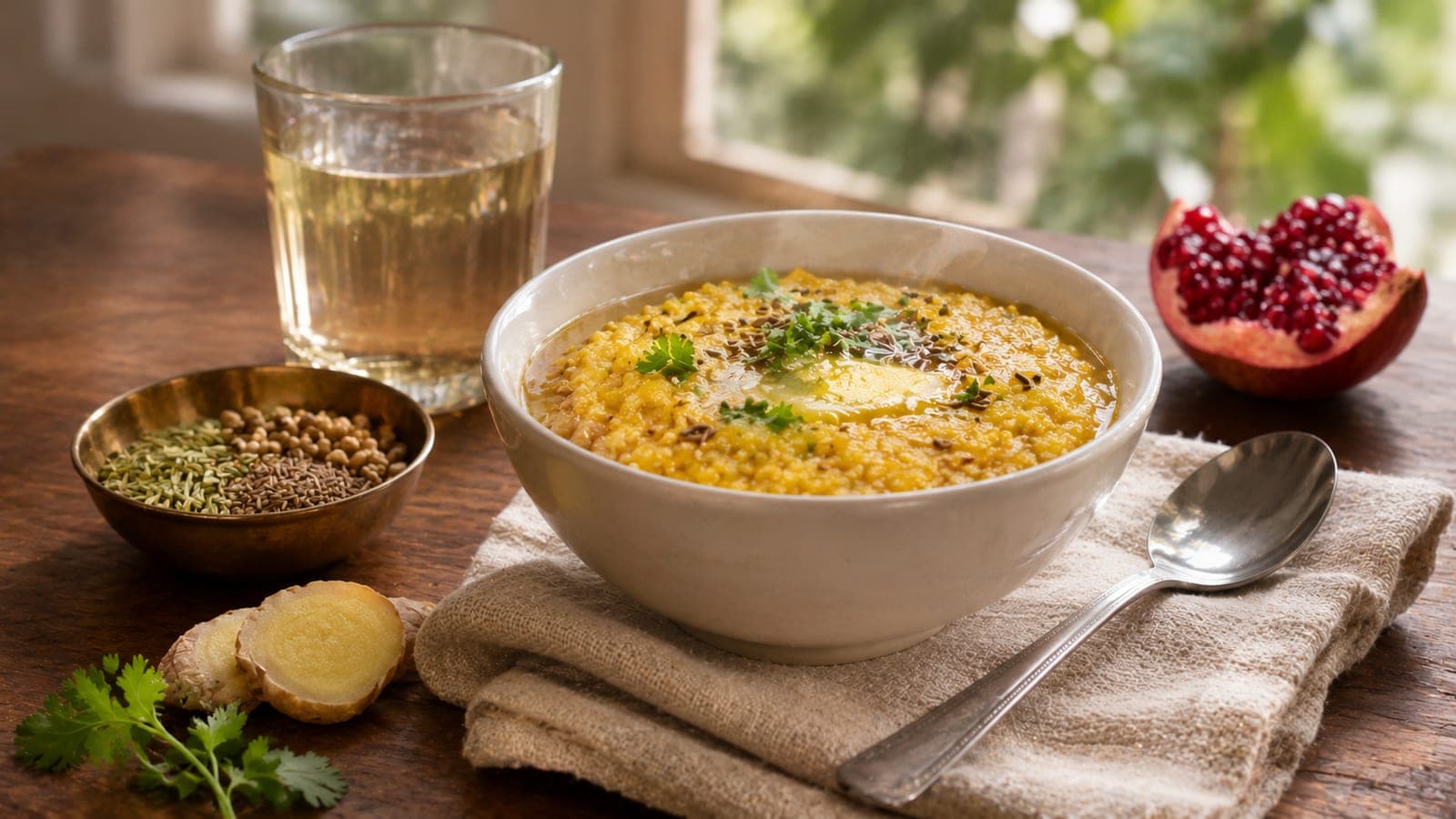
- Lunch (12–1.30pm): moong dal khichdi — one part split yellow moong to two parts rice, cooked soft with cumin, a little grated ginger, a pinch of turmeric and a teaspoon of ghee.
- Dinner (by 7.30pm): a smaller bowl of the same, or a thin vegetable soup.
- Through the day: cumin–coriander–fennel water, warm.
Days 3 and 4 — rebuild
- Keep khichdi or rice-and-dal at lunch.
- Add soft, cooked vegetables — lauki, tori, carrot, pumpkin, a little spinach.
- Add a light breakfast: poha, upma or a vegetable daliya.
- Dinner stays light: soup and a phulka, or a vegetable stew.
- Thin buttermilk with roasted cumin at lunch, if it suits you.
Day 5 — return
- Ordinary home food, eaten on time.
- Lunch as the main meal, dinner small and early.
- Leave about four hours between meals and don't snack in between.
That's the whole thing. It costs almost nothing, there is nothing to buy, and the only discipline it asks for is timing.
The morning routine that goes with it
- Scrape the tongue before you brush. If the coating is heavy, digestion is still catching up; as it clears, so does the ama.
- Warm water, before anything else.
- Twenty minutes of movement — a walk, gentle yoga, sun salutations at an easy pace.
- Abhyanga if you have the time: warm sesame oil over the body before a warm shower. It is winter, and your skin will thank you.
The shopping list
Everything for five days, for one person, from an ordinary kitchen:
- split yellow moong dal and good rice
- ghee — a small jar is plenty
- cumin, coriander and fennel seed
- fresh ginger, turmeric, rock salt, black pepper
- lauki, tori, carrots, pumpkin, a bunch of spinach or methi
- poha or daliya for breakfast
- a lemon or two
- seasonal fruit — a pomegranate, a papaya, guavas
What's not on it: packaged "detox" teas, supplements, powders, or anything that arrives in a bottle with a cleansing claim on the label. You don't need them.
What about the weight?
Most people step on the scales after Diwali and panic. Don't read too much into it. A good part of a quick post-festival gain is usually water and the sheer weight of food still in the gut — salt, refined carbohydrate and a lot of eating hold water — and much of it tends to settle within a week of returning to regular, simpler meals.
The reset isn't a weight-loss plan, and it shouldn't be turned into one. If, after a couple of weeks of normal eating and movement, the change hasn't gone, that's real and worth a sensible plan rather than a crash diet. Our Metabolic Balance & Weight Reset programme is built for the longer version of that problem.
If you have a health condition
Keep taking your medication as prescribed during a reset. If you have diabetes, make sure each meal still contains enough to keep your blood sugar stable — don't skip meals — and keep monitoring. If you are pregnant, breastfeeding, underweight or have a medical condition, talk to your doctor before changing how you eat. The reset is gentle, but your circumstances come first.
How to tell it's working
The sign you're looking for is real hunger: a clear, clean appetite arriving at lunchtime, rather than a vague wish to eat because it's lunchtime. Alongside it, the tongue coating thins, the heaviness after meals goes, sleep improves and energy steadies.
For most healthy people this takes three to five days. If pain, persistent acidity, vomiting or a real change in bowel habit hasn't settled by then, that's a doctor's appointment, not a longer cleanse.
Why khichdi, specifically
Because it is the one food that is both easy to digest and genuinely nourishing. That combination is rare, and it's why khichdi is the backbone of the diet during Panchakarma, where digestion is deliberately rested and then carefully rebuilt. I wrote about how that works in practice in what's actually on the plate at a wellness retreat.
When a home reset isn't enough
If the festive season was the last straw rather than the whole story — if bloating, acidity or sluggish digestion have been with you for months — five days of khichdi is a good start, not a solution.
Our Detox Refresh package is a three-night version of this reset done properly, with an herbal regimen, udvartana massage and digestive yoga. For longer-standing trouble, the seven-night Gut Health & Digestive Restore programme goes to the root.
And if you'd like a physician's view on which of those you need — or whether you need either — book a consultation.
Key takeaways
- The post-festival heaviness Ayurveda calls ama is undigested residue. The fix is to rest digestion, not starve it — so warm, simple food rather than cold juice.
- Days 1–2: moong dal khichdi, warm water, CCF tea. Days 3–4: add soft vegetables, soups and thin dal. Day 5: ordinary home food, eaten on time.
- A coated tongue, no morning appetite and heaviness after meals are the signs digestion is still behind. Real hunger returning is the sign it has caught up.
- Juice cleanses are cold, sugary and low in protein — close to the opposite of what an early-winter digestion needs.
- Keep the timing: lunch as the main meal, dinner by 7.30pm, nothing between meals except warm water and herbal tea.
Frequently asked
What is the best way to detox after Diwali?
Give your digestion a few days of rest with light, warm, cooked food — moong dal khichdi, soups, steamed vegetables — regular meal times, a light early dinner, warm water and gentle movement. Return to normal food gradually over about five days. You don't need supplements or a juice cleanse.
Is a juice cleanse good after the festive season?
From an Ayurvedic point of view, usually not. Cold, raw juices are hard on digestion in early winter, they are high in sugar and low in protein, and a crash fast often ends in a rebound binge. Warm, light, cooked food does the job more gently.
Why is khichdi recommended for a reset?
Moong dal and rice cooked soft with a little ghee and mild spices are easy to digest yet nourishing, so digestion can rest without the body being starved. It is the standard Ayurvedic food for recovery and the basis of the diet during Panchakarma.
How long does it take to recover from festive overeating?
For most healthy people, three to five days of simple eating is enough for appetite, energy and digestion to settle. If symptoms such as pain, persistent acidity, vomiting or a marked change in bowel habit last longer than that, see a doctor.
Can I exercise during a post-Diwali reset?
Yes — gentle to moderate movement helps. A brisk walk after lunch, morning yoga and stretching are ideal. Save very hard training for after the reset, once appetite and energy are back.
Written by
Rajesh Chada
Founder & CMD, The Ushmaya
Rajesh is the founder of The Ushmaya and the reason Kneipp hydrotherapy exists in India. He writes about water cure, Ayurveda and what genuine healing asks of you.
About Rajesh→A note on medical advice. This article is written for general understanding and is not a diagnosis or a treatment plan. Hydrotherapy, Panchakarma and fasting protocols are powerful and are not appropriate for everyone — particularly during pregnancy, or with cardiac, renal, circulatory or acute conditions. Every therapy at Ushmaya is prescribed after a consultation with our resident physicians. Please speak to your own doctor before changing how you treat a diagnosed condition.