
Food as Medicine
Ghee, Til and Gur: The Indian Winter Foods Ayurveda Recommends

By Rajesh Chada · Founder & CMD, The Ushmaya
16 November 2026 · 6 min read
In short
An Ayurvedic winter diet favours warm, cooked, slightly oily food with sweet, sour and salty tastes, because digestion is strongest in early winter. In an Indian kitchen: ghee, sesame, jaggery, bajra and makki, urad and moong dal, root vegetables, winter greens, amla and warming spices — and fewer cold drinks, night-time salads and skipped meals.
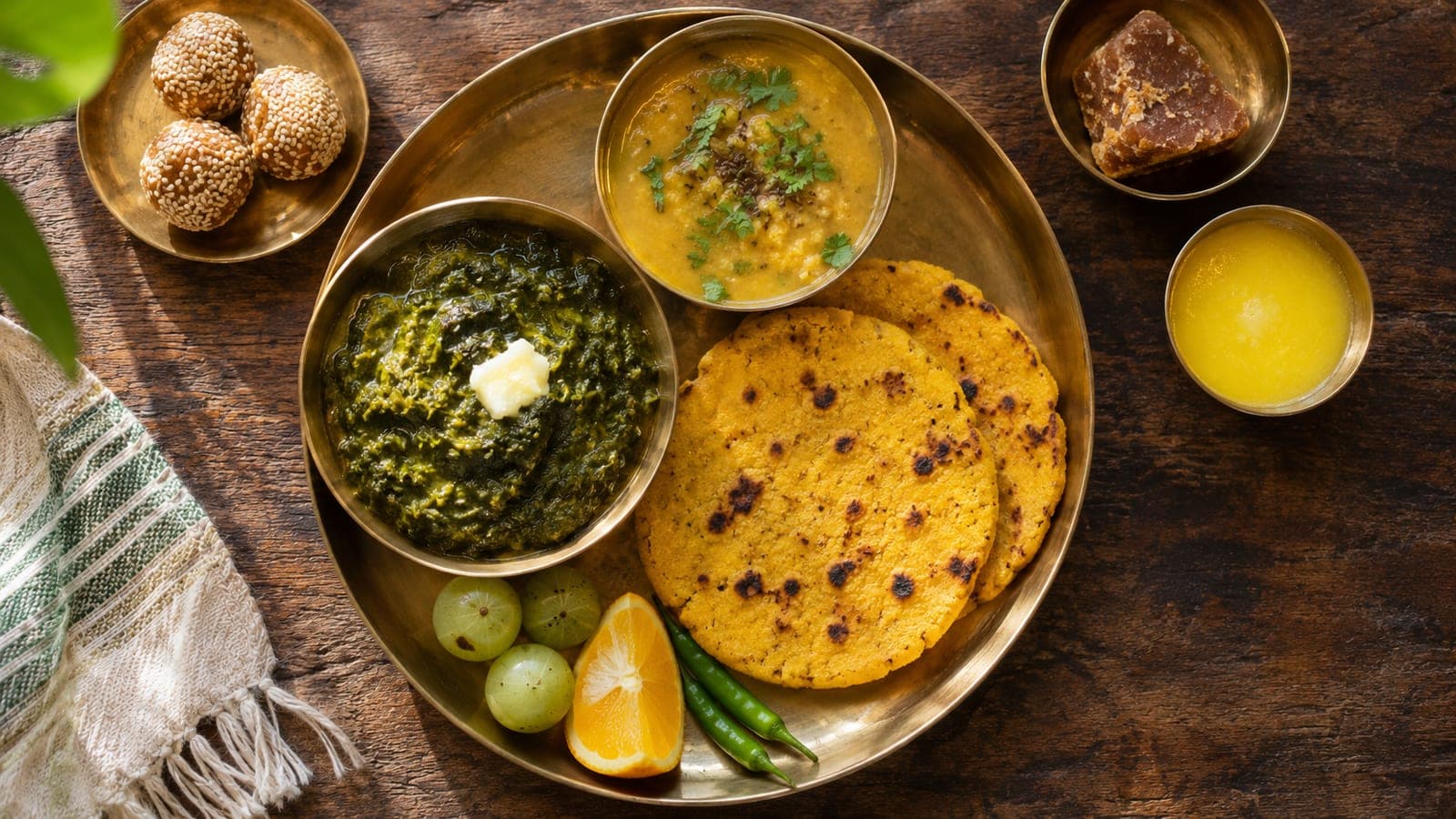
Ask anyone who grew up in north India what winter tasted like and you'll get the same list. Til ladoos and gajak. Sarson ka saag with makki ki roti and a generous blob of white butter. Gajar ka halwa. Gond ke ladoo that a grandmother made in batches. Warm milk with haldi at night.
It turns out that list is very close to what the classical texts recommend for Hemanta Ritu, early winter. Our grandmothers weren't reading Charaka. They were reading the weather, and getting the same answer.
Why winter food is different
Ayurveda holds that digestion is at its strongest in early winter. Cold outside holds the body's heat inside, and agni — the digestive fire — burns hotter than at any other time of year. I explain the concept in Agni: why Ayurveda treats digestion as the root of everything.
Two things follow:
- Heavier, nourishing food is well digested now — ghee, sesame, dals, millets.
- Too little food is the real risk. A strong digestion with too little to work on aggravates vata: dry skin, cracked heels, stiff joints, constipation, light sleep.
So the classical winter diet favours sweet, sour and salty tastes, and food that is warm, cooked and slightly unctuous.
The winter foods to favour
| Food group | What to eat | Why it fits winter |
|---|---|---|
| Fats | Ghee, sesame oil, white butter in moderation | Warming, nourishing, the direct answer to dryness |
| Seeds and nuts | Til (sesame), almonds, walnuts, peanuts, dates | Dense nourishment; til is the classical winter seed |
| Grains | Wheat, bajra, makki, new-season rice, ragi | Sustaining; millets are traditionally warming |
| Pulses | Urad, moong, rajma, chana | Heavier dals are well tolerated in winter |
| Sweeteners | Gur (jaggery), gajak, chikki | Preferred over white sugar; still sugar |
| Vegetables | Carrot, beetroot, sweet potato, radish, turnip, cauliflower | Roots are grounding and in season |
| Greens | Sarson, methi, bathua, palak | Winter greens, best cooked with ghee and garlic |
| Fruit | Amla, oranges, guava, pomegranate | Amla is the season's great fruit |
| Dairy | Warm milk, fresh paneer, ghee | Warm milk with turmeric or nutmeg at night, if it suits you |
| Spices | Ginger, black pepper, cinnamon, clove, ajwain, turmeric | Warming and supportive of digestion |
What to cut back
- Cold drinks and iced water, especially with meals
- Ice cream and chilled desserts
- Raw salads at dinner — fine at lunch in moderation, hard on digestion at night
- Dry, puffed and packaged snacks — they aggravate vata
- Fridge-cold leftovers eaten without reheating
- Crash diets and long fasts, which the texts specifically warn against in this season
A day of winter eating
- On waking: a glass of warm water. A few soaked almonds.
- Breakfast: vegetable daliya, besan chilla, or a stuffed methi or mooli paratha with a little ghee and curd at room temperature. Ginger tea.
- Lunch — the main meal: makki or bajra roti, sarson ka saag with ghee, a dal, a root-vegetable sabzi and a small piece of gur to finish. Or rice, urad-moong dal, a cauliflower sabzi and amla chutney.
- Afternoon: a seasonal fruit — guava or orange — or a small til ladoo.
- Dinner (early, warm, lighter): vegetable soup with a phulka, or moong dal khichdi with ghee.
- Bedtime (optional): warm milk with a pinch of turmeric or nutmeg.
The traditional winter recipes, through an Ayurvedic lens
Sarson ka saag with makki roti. Mustard greens are pungent and warming; maize is sustaining; the ghee or butter makes them digestible. It's a very complete winter meal, and a heavy one — lunch, not dinner.
Til-gur ladoo and gajak. Sesame and jaggery: warming, nourishing, and the classical answer to winter dryness. One a day is a remedy. Six is a dessert.
Gajar ka halwa. Carrots, milk, ghee, sugar. Seasonal and nourishing in small amounts — it is still a rich sweet.
Gond ke ladoo and panjiri. Edible gum, whole wheat flour, ghee, nuts and dry fruits — traditionally given in winter and after childbirth for strength. Dense and very rich; a small piece is enough.
Amla in any form. Raw with salt, as murabba, in chutney, or in chyawanprash. Amla is sour, which suits winter, and is one of the most valued fruits in Ayurveda.
Three simple winter recipes
Til-gur ladoo (makes about 12). Dry-roast a cup of white sesame seeds in a heavy pan until they just begin to colour and smell nutty. Melt three-quarters of a cup of grated jaggery with a teaspoon of ghee and a tablespoon of water over a low flame until it is glossy and slightly thick. Stir in the sesame and a pinch of cardamom, take it off the heat, and when it is cool enough to handle, grease your palms with ghee and roll into small balls. One a day, in the afternoon.
Moong-palak soup. Pressure-cook half a cup of split yellow moong with three cups of water, a pinch of turmeric and a little grated ginger. Add a large handful of chopped spinach and simmer for five minutes. Temper with a teaspoon of ghee, cumin seeds and a pinch of black pepper. Salt to taste. This is the right kind of winter dinner: warm, light, nourishing and quick.
Amla-ginger chutney. Deseed four fresh amla and grind with a small piece of ginger, a handful of coriander leaves, a green chilli if you like heat, a pinch of rock salt and a little jaggery. Keep it in the fridge for three or four days and bring it to room temperature before eating. A spoonful at lunch is the easiest way to get amla every day of the season.
If you're not vegetarian
The classical winter diet in the texts includes meat soups and broths among its nourishing foods, which reflects how the season's strong digestion was understood. At Ushmaya our kitchen is sattvic, but if you eat meat at home, Ayurveda's direction for winter would be a warm, well-cooked soup or stew at lunch rather than heavy fried or grilled meat late at night.
Two honest caveats
Jaggery is still sugar. Ayurveda prefers it to refined sugar, and it carries traces of minerals white sugar doesn't. But for blood sugar, it behaves much like sugar. If you're managing diabetes or prediabetes, count it as sugar. Our Diabetes Reversal & Management programme deals with exactly this balance.
Generous eating needs generous movement. Winter is the season the texts permit the most vigorous exercise. If you eat like a Punjabi grandfather and move like an office chair, the nourishment doesn't build strength — it accumulates, and Ayurveda would say it becomes the kapha that shows up in spring as heaviness, congestion and lethargy.
Portion and timing still matter
Strong appetite is not permission to eat at 10pm. The rules from the Sharad Ritu food guide about lunch being the main meal still apply: eat your heaviest food at midday and keep dinner warm, early and lighter. Winter makes it easier, not unnecessary.
Eating this way for a week
At Ushmaya, food is part of the prescription rather than part of the hospitality, and in winter the plate changes with the season — I described the thinking in what's actually on the plate at a wellness retreat. If you'd like a diet built for your own constitution and the season, rather than a general list, that's what our Gut Health & Digestive Restore programme does.
Or simply talk to our physicians about what your winter plate should look like.
Key takeaways
- Winter is the season to eat properly, not to diet. Ayurveda warns that a strong winter digestion without enough fuel aggravates vata — dry skin, stiff joints, poor sleep.
- The traditional winter staples — til, gur, ghee, bajra, makki, sarson, methi, gajar, amla, gond — line up almost exactly with the classical Hemanta Ritu diet.
- Jaggery is still sugar. It is a better winter sweetener than white sugar in Ayurvedic terms, but anyone managing blood sugar should count it the same way.
- Make lunch the biggest meal and keep dinner warm, early and lighter. Winter appetite is strong, but late heavy dinners still disturb sleep.
- Generous eating needs daily movement. Without it, winter's nourishment becomes spring's heaviness and congestion.
Frequently asked
What should I eat in winter according to Ayurveda?
Warm, cooked, nourishing food with a little fat: ghee, sesame, jaggery, wheat, millets such as bajra and makki, urad and moong dal, root vegetables, winter greens like sarson, methi and bathua, amla, oranges, dates and nuts, and warming spices such as ginger, black pepper, cinnamon and ajwain. Warm milk with turmeric suits many people at night.
What foods should be avoided in winter in Ayurveda?
Cold and iced drinks, ice cream, raw salads late in the day, dry and puffed snacks, leftover refrigerated food eaten cold, very light diets and long fasts. Excessively heavy food late at night is also discouraged, even in winter.
Is jaggery healthier than sugar in winter?
Ayurveda considers jaggery warming and prefers it to refined white sugar, and it contains small amounts of minerals that white sugar lacks. But nutritionally it is still mostly sugar, so people with diabetes or prediabetes should treat it like sugar and keep portions small.
How much ghee should I eat in winter?
Modest amounts — for most healthy people, a teaspoon or two a day added to dal, rice or roti is plenty. Winter digestion handles fat well, but the benefit comes from regular small amounts, not large quantities. If you have a heart condition or high cholesterol, follow your doctor's advice.
Are millets good in winter?
Yes. Bajra (pearl millet) and makki (maize) are traditional north Indian winter grains, considered warming and sustaining. Cooked with ghee and eaten with greens such as sarson or bathua, they make a classic winter meal. Ragi and jowar are good alternatives.
Written by
Rajesh Chada
Founder & CMD, The Ushmaya
Rajesh is the founder of The Ushmaya and the reason Kneipp hydrotherapy exists in India. He writes about water cure, Ayurveda and what genuine healing asks of you.
About Rajesh→A note on medical advice. This article is written for general understanding and is not a diagnosis or a treatment plan. Hydrotherapy, Panchakarma and fasting protocols are powerful and are not appropriate for everyone — particularly during pregnancy, or with cardiac, renal, circulatory or acute conditions. Every therapy at Ushmaya is prescribed after a consultation with our resident physicians. Please speak to your own doctor before changing how you treat a diagnosed condition.